06/03/2026

BB reverses policy, allows depositors of merged banks to earn profits
Staff Correspondent | Published: 2026-01-22 22:04:04
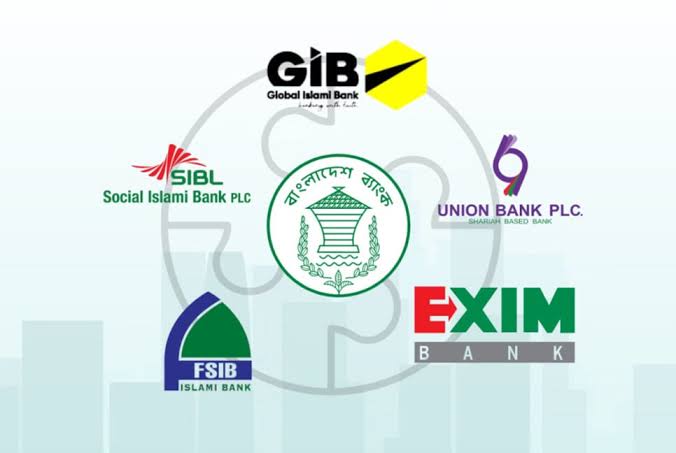
Bangladesh Bank has reversed a contentious policy that barred depositors of five recently merged banks from receiving profits for 2024 and 2025, following widespread criticism and ethical concerns.
The central bank’s move restores interest payouts, easing tensions among affected account holders.
Under the new decision, depositors will now receive a 4 percent profit rate for those two years. Starting from the current year (2026), market-based profit rates will apply. Currently, the bank has announced a profit rate of approximately 8.5 percent.
The central bank communicated this updated policy via a letter sent to the administrators of the affected banks on Wednesday (January 21).
Backtrack on ‘Haircut’ Policy
The reversal comes just a week after a January 14 directive which stated that no profit would be applicable to any deposits from January 1, 2024, to December 28, 2025.
That letter even suggested that any profit already withdrawn by depositors would be "adjusted" from their principal amount, a process known as a ‘haircut’. The initial announcement sparked widespread outrage.
Many depositors gathered at various branches of the newly formed Sammilito Islamic Bank PLC to express their anger. Furthermore, the Central Shariah Board intervened, stating it was ‘not Shariah-compliant’ to shift the burden of embezzlement, caused by the negligence of the banks and the regulator, onto the depositors.
The government recently created Sammilito Islamic Bank PLC by merging five Shariah-based lenders—Exim Bank, Social Islami Bank, First Security Islami Bank, Global Islami Bank, and Union Bank—that were weakened by massive loan irregularities and embezzlement.
These banks hold approximately Tk 1.42 lakh crore in deposits from nearly 76 lakh depositors.
In contrast, out of the Tk 1.92 lakh crore distributed as loans, roughly 77 percent has become defaulted.
Shariah and Accountability
Internal debates within the central bank and insights from Islamic banking experts played a key role in this policy shift. Experts pointed out the following detail.
Mudaraba Principles: In Shariah banking, depositors are "Sahib-al-Mal" (capital providers) and the bank is the ‘Mudarib’ (manager).
Liability for Negligence
While depositors normally share business losses, Shariah standards (specifically AAOIFI standards followed in Bangladesh) dictate that if a loss occurs due to the bank's negligence, misconduct, or breach of trust, the bank alone must bear the liability.
By reinstating the profit, the central bank acknowledges that depositors should not be penalised for the systemic failures and financial crimes that led to the banks' instability.
Editor & Publisher : Md. Motiur Rahman
Pritam-Zaman Tower, Level 03, Suite No: 401/A, 37/2 Bir Protik Gazi Dastagir Road, Purana Palton, Dhaka-1000
Cell : (+88) 01706 666 716, (+88) 01711 145 898, Phone: +88 02-41051180-81