06/03/2026

Corporate borrowing from banks to be reduced: BB chief
Staff Correspondent | Published: 2026-01-26 16:23:11
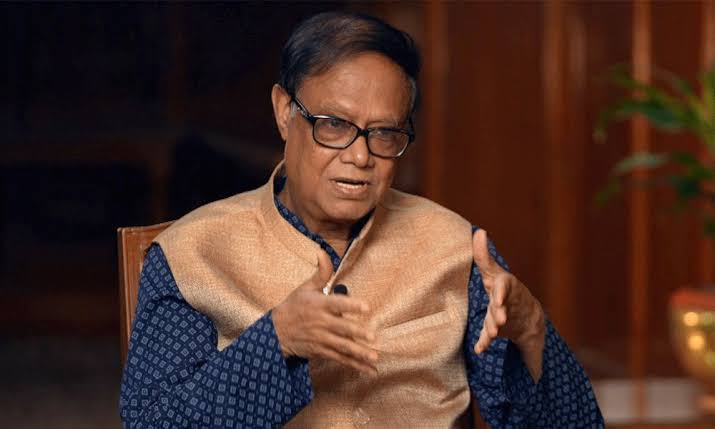
The central bank plans to reduce the volume of large corporate loans from the banking sector as part of efforts to rein in defaulted loans and develop the bond market, says Bangladesh Bank Governor Ahsan H Mansur.
Speaking at a seminar titled “Bond Market Development in Bangladesh: Challenges and Recommendations” at a hotel in Dhaka’s Gulshan on Monday, the governor said: “The corporate sector will be separated from banks. Large borrowers will not be allowed to exceed the single borrower limit.”
Currently, there is a ceiling on how much a company or group can borrow from a commercial bank, called a single borrower limit.
At present, the single borrower limit is set at a maximum of 25 percent of a bank’s capital, meaning a single client cannot receive loans exceeding that amount. Of this, funded loans can be up to 15 percent and non-funded loans up to 10 percent.
However, this limit has been relaxed for sectors such as power, energy and green financing.
Describing the move to strictly enforce the single borrower limit as a “push factor”, Mansur said discussions would be held with corporate entities to encourage them to move to the bond market, offering them attractive facilities.
“Measures will be taken to reduce the time and cost involved in issuing bonds, making them more lucrative to investors. The time has come to consider whether any incentives can be offered to encourage the corporates to issue bonds. We are working on this,” he said.
Bangladesh Bank and the Bangladesh Securities and Exchange Commission (BSEC) have jointly conducted a research initiative to develop the government and corporate bond markets. Based on that research, Bangladesh Bank official Ezazul Islam presented the findings at the seminar.
The recommendations of his keynote paper says that a “one-stop” service desk at Bangladesh Bank for purchasing government bonds, allowing anyone to buy bonds directly and online can be established.
Referring to global trends, Governor Mansur said bonds rank first in global financial markets, followed by capital markets, with the money market in third place. “In Bangladesh, it is the opposite—the money market comes first. This needs a major change, which must come from the combined efforts of the government and the business community,” he said.
“The government takes out the largest loans. Its borrowing can develop the bond market and make it vibrant. Therefore, the government must come forward in developing the bond market,” he added.
He noted that the money market is stabilising as money has not been printed and injected into it for a long time, creating an opportunity to expand the bond market.
“We have a savings certificate market worth Tk 5–6 trillion. This can easily be brought into the secondary market. Anyone should be able to sell these products easily. Making them tradable is not difficult. Doing this alone would double the size of the bond market overnight,” he said.
The governor said that in order to expand the bond market, authorities must create “trust” in investors that the companies would repay the capital and interest on time. Otherwise, the companies would be considered as loan defaulters, he said.
He also suggested that the government could issue bonds to meet future pension obligations for new public sector employees, proposing a fund-based pension system.
The governor identified high inflation and bank lending rates of around 16 percent as the biggest challenges to bond market development.
“A stable macro economy is essential to strengthen the bond market. Inflation must be controlled. With bank interest rates at 16 percent, it is difficult to build a strong bond market,” he said.
Mansur expressed optimism that a functional bond market could be established within five to seven years if the economy is fully stabilised.
At the seminar, BSEC Chairman Khondaker Rashed Maqsood said corporates would have little incentive to enter the capital market if bank loans were easily available.
“The size of defaulted loans has grown largely because banks provide long-term loans, creating major mismatches that have led to the current poor state of defaulted loans,” he said.
He added that while Bangladesh Bank is currently leading bond market development, regulatory oversight would eventually shift fully to the stock market regulator. “We want to move the economy away from dependency on banks to greater reliance on the stock market,” he said.
Finance Division Secretary Khairuzzaman Mozumder said treasury bonds had been brought into the secondary market, but challenges remained due to the inability to collect government taxes at every transaction stage. “This is a software-related issue, which is being addressed jointly by Bangladesh Bank, the BSEC and the finance ministry.
He also said the finance ministry has begun considering lifting the ceiling on savings certificates.
International Chamber of Commerce (ICC) Bangladesh President Mahbubur Rahman said Bangladesh has significant potential for a large bond market, which should be tapped.
A panel discussion moderated by Bangladesh Bank Deputy Governor Habibur Rahman featured Dhaka Stock Exchange Chairman Mominul Islam, BSEC Commissioner Md Saifuddin and City Bank Managing Director Mashrur Arefin and Pran-RFL Group Director Uzma Chowdhury.
Editor & Publisher : Md. Motiur Rahman
Pritam-Zaman Tower, Level 03, Suite No: 401/A, 37/2 Bir Protik Gazi Dastagir Road, Purana Palton, Dhaka-1000
Cell : (+88) 01706 666 716, (+88) 01711 145 898, Phone: +88 02-41051180-81