05/26/2026

Inclusion can't be selective and localization can't be a myth
Rezaul Karim Chowdhury | Published: 2026-05-03 17:12:16
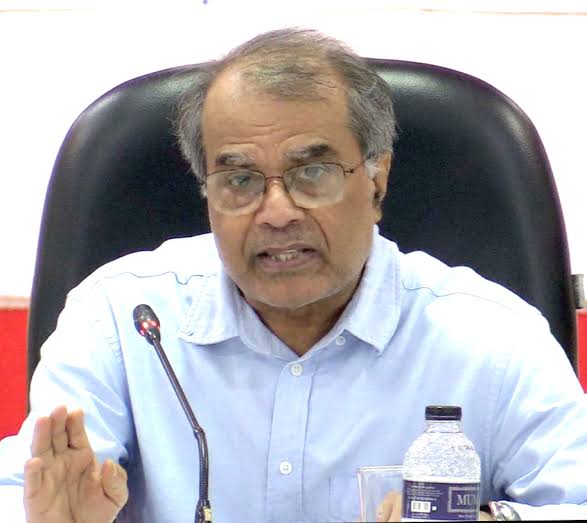
Coast Foundation's Executive Director Reazul Karim Chowdhury today writes an open letter to his organisation's donors and RCT members. In this letter, he asks their cooperation to establish direct and structured engagement with local civil society.
I write not merely as an individual participant in the Rohingya response architecture, but as a representative voice of local civil society—one that has long been engaged, often unheard, yet persistently present. From the early days of coordination to my recent role within the NGO Platform, the journey has not been easy. It has required sustained effort simply to reach spaces where local voices should have been foundational from the outset.
Let me begin by acknowledging your invitation to the upcoming meeting. I will attend as requested—online, as an observer, without intervention, and in full respect of the established ground rules. However, silence in a meeting cannot mean silence in principle. Some concerns must be placed on record.
A pattern is becoming increasingly evident. Funding streams that should empower local organizations are instead being redirected toward international NGOs. Many of these organizations were expected to mobilize resources independently, yet are now major recipients of funds raised within Cox’s Bazar itself. This raises a fundamental question: whose localization is being practiced here?
Equally concerning is the distribution of pooled humanitarian funds. Significant allocations continue to be absorbed by UN agencies, with most of the remainder flowing to international actors. Local NGOs remain largely excluded, with little clarity on selection processes. The absence of transparency and open competition not only marginalizes capable local actors but also erodes trust in the system.
Public narratives around “localization” further complicate this reality. While global commitments emphasize shifting power and resources to local actors, the implementation on the ground tells a different story. When such discrepancies are raised formally, the lack of response only reinforces a perception of indifference.
Local civil society has also faced consistent barriers to participation in key sectors. Despite years of advocacy on issues such as environmental sustainability, host community protection, and appropriate shelter solutions, access to decision-making platforms remains restricted. At the same time, reports of major interventions being undertaken through opaque processes raise serious concerns about accountability.
The issue extends beyond NGOs. Local civil society includes local government bodies and elected representatives, whose exclusion weakens both legitimacy and effectiveness. Yet, engagement opportunities with donors and decision-makers remain tightly controlled, often limiting interaction to carefully curated environments.
Perhaps most troubling is the concentration of funding within a narrow circle of organizations. In a protracted crisis, such an approach is neither sustainable nor equitable. Humanitarian response must be inclusive, competitive, and transparent—not confined to a select few.
It is worth recalling that in the first 40 days of the 2017 influx, it was local communities and civil society who responded immediately—delivering essential services with remarkable efficiency and minimal resources. That contribution should not be forgotten, nor should it be sidelined.
We urge donors to establish direct and structured engagement with local civil society. Inclusion must be meaningful, not symbolic. Localization must be practiced, not proclaimed.
If we are to move forward with credibility, the system must embrace complementarity in its true sense—where local and international actors work together, not in a hierarchical manner, but in genuine partnership.
Editor & Publisher : Md. Motiur Rahman
Pritam-Zaman Tower, Level 03, Suite No: 401/A, 37/2 Bir Protik Gazi Dastagir Road, Purana Palton, Dhaka-1000
Cell : (+88) 01706 666 716, (+88) 01711 145 898, Phone: +88 02-41051180-81