06/01/2026

Seasonal rawhide traders, madrasahs suffer huge losses amid few buyers, poor rates
Staff Correspondent | Published: 2026-06-01 03:28:10
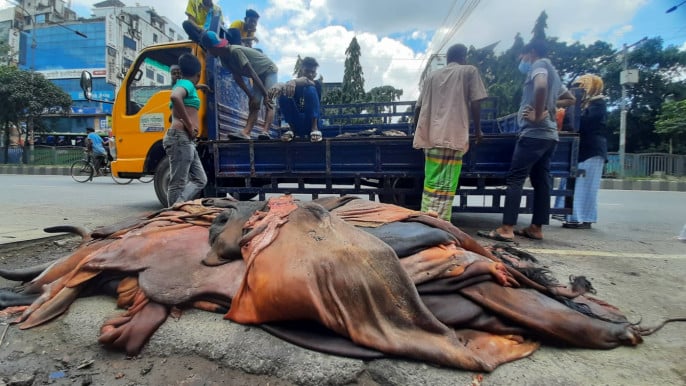
Seasonal rawhide traders, madrasahs and religious orphanages are enduring massive financial losses this Eid as they are failing to find prospective wholesalers and tannery owners to sale their products. Even when offering eye-watering cheap rates, buyers are hard to come by in most parts of the country.
Amid an acute shortage of storage options, the seasonal traders and madrasahs are dumping the hides on roads, throwing them into ponds and rivers, and burying them underground. These measures are causing additional headache by severely polluting the environment.
According to traders and experts, the causes behind the low rates and low buyer turnout are: syndication, increased transport costs, weak storage options, pre-existing debt, losses from previous Eids and shrinking of export market with the departure of European buyers.
In Posta area of the capital, a quality cowhide was offered maximum Tk500. Furthermore, few cuts to the hides brought down the price to Tk100-Tk200. For perspective: the government-set rate for a hide is minimum Tk1,000 and maximum Tk3,000 in this Eid season.
In Science Lab and Hatirpool areas, the maximum rate could reach Tk700 occassionally. But by evening, the rate fell down and hit the lowest mark of Tk150.
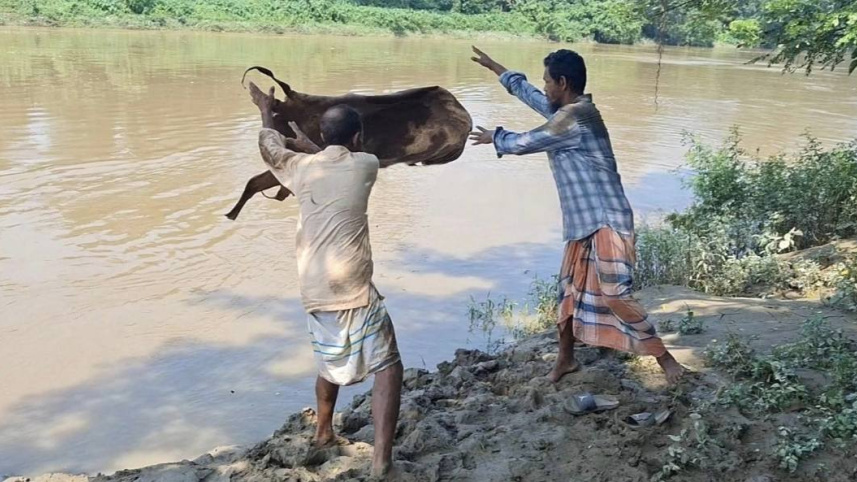
The most tragic scene was reported in Feni's Dagonbhuiyan upazila. According to local correspondents; two seasonal traders threw over 100 unsold hides in the Katakhali river in Momarizpur village, causing environmental concerns.
One trader, Khurshid Alam, alleged he waited throughout the night on Thursday and even past midnight waiting for a single wholesaler or businessman. But none arrived. As the hides began to rot and emit bad smell, he had to throw them into a river, Khurshid said.
Separately, Azizia Sultania Uloom Madrasah authorities reportedly threw 400 unsold hides into the Muhuri river. The madrasah is located in Lakkhipur village of Fulgazi upazila.
In Satkhira, seasonal traders buried unsold hides underground to avoid releasing bad odour of rotting hides into the air. The district's livestock officer Dr FM Mannan Kabir said the situation was "highly disappointing."
In Brahmanbaria, traders left unsold hides on the roads in many areas. Later, in the evening, Brahmanbaria-3 lawmaker ordered the removal of the hides from across the town. They were sent to waste processing sites.
Seasonal traders bought quality cowhides from Muslim devotees for Tk50, Tk100, Tk200 and maximum Tk500. However, even at this rate, they could hardly find wholesalers or business owners.
In Lakshmipur's Chandraganj upazila, authorities at the Madinatul Uloom Dakhil Madrasah buried as many as 150 animal hides underground.
The madrasah officials said they collected the hides for free from residents as is usual. However, they had to spend big to hire collectors and pay transport costs -- all of which proved futile.
Editor & Publisher : Md. Motiur Rahman
Pritam-Zaman Tower, Level 03, Suite No: 401/A, 37/2 Bir Protik Gazi Dastagir Road, Purana Palton, Dhaka-1000
Cell : (+88) 01706 666 716, (+88) 01711 145 898, Phone: +88 02-41051180-81