Dhaka-Beijing ties set for economic upgrade
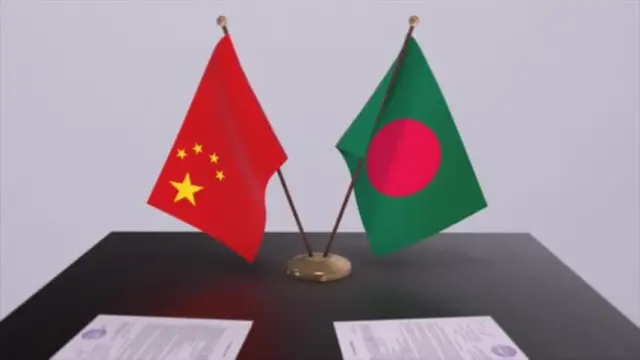
Officials and analysts said the visit signals Dhaka’s intent to deepen economic ties with Beijing, particularly in infrastructure, energy, technology and regional connectivity
Ainul Haque Royal
Tarique Rahman's China visit, Bangladesh China trade, economic cooperation, China investment, bilateral relations, Mongla Port, renewable energy, artificial intelligence’s upcoming visit to China is set to focus on expanding trade, investment and economic cooperation, with multiple agreements and memorandums of understanding (MoUs) expected to be signed to take bilateral relations to a new height.
Officials and analysts said the visit signals Dhaka’s intent to deepen economic ties with Beijing, particularly in infrastructure, energy, technology and regional connectivity.
After wrapping up engagements in Kuala Lumpur, the prime minister will travel to Beijing today at the invitation of Chinese Premier Li Qiang, in what is being viewed as a strategically significant visit in the evolving global economic landscape. At least three agreements, alongside 13 MoUs, an action plan and a protocol, are expected to be signed during the visit.
Key areas of cooperation include the modernisation of Mongla Port, implementation of China’s Global Development Initiative (GDI), environment-friendly energy production, geological surveys, artificial intelligence and technical education.
Media cooperation is also on the agenda, with proposed agreements involving Bangladesh Television (BTV), Bangladesh Sangbad Sangstha (BSS), Bangladesh Betar and China Media Group, as well as collaboration with China’s state-run news agency Xinhua.
Economists believe the visit could open new avenues for investment and trade with China, the world’s second-largest economy, at a time when Bangladesh is seeking to diversify its economic partnerships and accelerate growth.
“China is one of our major development partners. This visit is expected to yield tangible outcomes in advancing Bangladesh’s economic interests,” said Prof Dr Sabbir Ahmed of Dhaka University.
Officials said the visit aims not only to strengthen existing cooperation but also to explore new areas of engagement, particularly in high-value sectors such as digital technology, renewable energy and industrial development.
Chinese Ambassador to Bangladesh Yao Wen said the visit carries historic importance as the two countries look ahead to the next phase of their partnership.
“This visit will inject strong impetus into the development of China-Bangladesh relations and promote the upgrading of the Comprehensive Strategic Cooperative Partnership in both quality and substance,” he said in a statement. He added that bilateral ties are expected to deepen further through enhanced political trust, practical cooperation and international collaboration.
Political observers note that while economic priorities dominate the agenda, the visit also reflects a continuity in Bangladesh’s long-standing engagement with China.
Relations between the two countries date back to January 1977, when BNP founder and then army chief Ziaur Rahman made a landmark visit to Beijing, establishing formal bilateral ties and signing agreements on economic and technical cooperation.
Since then, successive BNP leaderships, including former prime minister Khaleda Zia, have maintained regular engagement with China, both in government and in opposition. Khaleda Zia last visited China in October 2012, where she held meetings with senior Chinese leaders, including then Vice President Xi Jinping.
In recent months, bilateral exchanges have intensified. A 19-member BNP delegation led by Secretary General Mirza Fakhrul Islam Alamgir visited China in April, holding meetings with Chinese Vice President Han Zheng and senior Communist Party officials.
Earlier in June, a separate delegation comprising members of Jatiyatabadi Jubo Dal and Jatiyatabadi Chhatra Dal took part in a study and knowledge-sharing programme in China, focusing on contemporary political and global issues.
Senior BNP leader Khandaker Mosharraf Hossain described China as a key development partner, emphasising that bilateral ties have remained steady over time.
“China is a vital partner for Bangladesh in trade and investment. This relationship has endured and will continue to grow,” he said.
With Bangladesh seeking to attract foreign investment and strengthen its economic base, analysts say the success of the visit will ultimately be measured by the scale and implementation of the agreements reached.
Shamiur Rahman