Is the Law Really Weak Against Drugs?
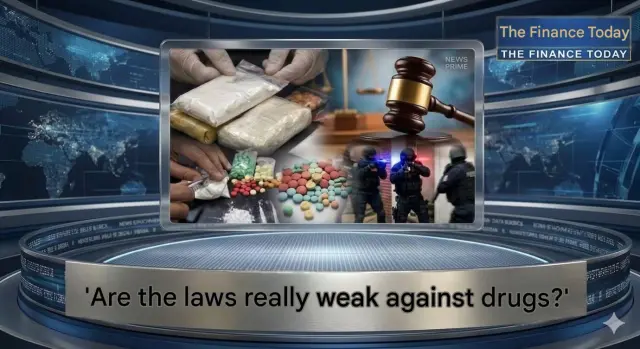
Enforcement focuses on users and street dealers while the networks behind the trade remain largely intact
"Narcotics is a dirty business. It will destroy the next generation. We must stop it now otherwise the entire system will collapse." Once upon a time, an unknown politician from Kerala state of India made that remarks in a party meeting.
Bangladesh has been fighting the same illegal drug trade for years, with regular raids by law enforcement agencies and the Department of Narcotics Control (DNC) across the capital, border districts and other parts of the country. Drugs are seized from streets, parks, railway stations, residential neighbourhoods and border routes. People are arrested, cases are filed and consignments of yaba, cannabis, heroin and phensedyl are confiscated. Yet the drug market continues to thrive.
That raises a question that goes beyond whether Bangladesh's drug laws are sufficiently tough. The bigger issue is how those laws are enforced — and whether investigations are reaching the financiers, traffickers, supply chains and financial networks that keep the market alive.
Critics say a large share of anti-drug operations targets users and small-scale street dealers, while comparatively less attention is paid to the sources of supply, cross-border routes, warehouses, money laundering and the assets of major traffickers.
The result is a paradox: arrests and seizures continue to rise, but the availability of drugs remains a persistent problem.
The law is already tough
Bangladesh's Narcotics Control Act 2018 provides severe penalties for drug-related offences. Punishment varies according to the type and quantity of drugs involved, with some offences carrying life imprisonment or even the death penalty.
For certain offences involving yaba, heroin or cocaine, possession of quantities above specified thresholds can attract extremely severe punishment.
At the same time, the law recognises an important distinction between a person who is addicted and someone involved in trafficking or other serious drug offences.
Section 36(4) allows a court, where an accused is found to have committed no drug offence other than consumption, to treat the person as drug-dependent and send them to a treatment centre. Refusal to undergo treatment can result in imprisonment.
In other words, the law is not based solely on punishment. It also provides a route towards treatment and rehabilitation.
The question is how often that option is being used effectively.
Arrests are rising — but is the market shrinking?
DNC statistics record extensive anti-drug operations, arrests, cases and seizures over the years. Border forces, particularly the Border Guard Bangladesh, have also carried out large-scale operations against drug smuggling and other forms of cross-border trafficking.
The scale of enforcement demonstrates that there is no shortage of raids. But the effectiveness of those operations is a different matter.
A drug market is a supply chain. Arresting a user removes one customer, while arresting a street-level dealer may disrupt one small point of distribution. Unless the wider network is dismantled, however, new suppliers and customers can quickly replace them. That is why the number of arrests alone may provide a misleading picture of success.
Easier to arrest users, harder to dismantle networks
The fundamental challenge lies here. When drugs are found on a user, there is usually immediate physical evidence, making an arrest and filing a case relatively straightforward.
Going after a major trafficker is much more complicated.
Investigators must establish where the drugs came from, how they crossed the border, who financed the shipment, who transported and stored it, who received the profits and where the money went.
They may also need to trace bank transactions, identify assets acquired through illicit proceeds, investigate suspected money laundering and map the network of associates involved in the operation.
That requires time, specialised investigators, intelligence capabilities, surveillance technology and coordination between multiple agencies.
If enforcement is measured primarily by the number of arrests and cases filed, authorities may naturally gravitate towards offenders who are easiest to identify and prosecute.
That creates a dangerous imbalance: the visible end of the drug market receives attention while the people controlling the money and supply remain harder to reach.
The bigger challenge begins after the arrest
Even when major traffickers are arrested, securing a conviction can be difficult. A drug seizure by itself is not always enough. Prosecutors must establish how and from whom the drugs were recovered and maintain the chain of custody of the seized material.
Witness testimony, forensic examinations, seizure lists, evidence preservation and the integrity of the investigation can all become crucial in court.
If any part of that process is weak, cases can drag on.
Witnesses may fail to appear. Investigations can take years. Courts face heavy caseloads. Defendants can seek bail through established legal procedures.
As a result, a relatively straightforward street-level drug case may move faster than a complex case involving an entire trafficking network.
This is where the gap between the severity of the law and the reality of enforcement becomes most visible.
Is an addict a criminal — or a person in need of treatment?
This is one of the central questions facing Bangladesh's drug policy.
Drug use can cause serious harm to individuals, families and communities. But for people who have developed physical or psychological dependence, imprisonment alone is unlikely to solve the underlying problem.
A person released from prison may return to the same social environment, without treatment, counselling, employment or family support.
The cycle can begin again.
Punishment can address the legal consequences of drug use. It does not necessarily address addiction itself.
That is why treatment and rehabilitation need to be treated as part of drug control rather than as an alternative policy operating separately from enforcement.
Treatment capacity has expanded — but &
Bangladesh's public treatment infrastructure has expanded in recent years.
Government facilities include the Central Drug Addiction Treatment Centre in Dhaka, whose capacity has been increased to 124 beds, along with regional centres in Chattogram, Khulna and Rajshahi, each with additional beds.
Hundreds of private treatment and rehabilitation centres also operate across the country.
So it would no longer be accurate to describe government treatment as being confined to a handful of facilities or a few dozen beds.
But the more important question is whether existing capacity is sufficient for the scale of demand.
That requires a broader assessment of the number of people needing treatment, the availability of beds, treatment quality, geographical access and the ability of patients to complete rehabilitation.
The cost of private treatment is another barrier
For many families, private rehabilitation remains the main option outside government facilities.
Treatment costs vary considerably depending on the centre, location and type of care. For low-income families, the expense of long-term treatment can be prohibitive.
Some families may therefore seek a quick legal or custodial solution rather than sustained medical care.
The state's responsibility, consequently, cannot end with raids and arrests. Affordable, accessible and quality treatment must also be part of the response.
What Bangladesh can learn from Portugal?
Portugal is frequently cited in international debates over drug policy. In 2001, the country replaced criminal penalties for possession and use of limited quantities of drugs for personal consumption with an approach centred more heavily on health and social intervention. That did not mean drugs were legalised.
Instead, people found using or possessing small amounts for personal use could be referred towards health and social services rather than being processed through the criminal justice system in the same way as traffickers.
Research on Portugal has reported a number of positive outcomes, although the country's experience is more complicated than a simple narrative of success. Its policies have evolved over time and have faced their own challenges.
For Bangladesh, the lesson need not be to copy Portugal wholesale. A more relevant lesson could be to separate users from traffickers: provide treatment and rehabilitation for people struggling with addiction while maintaining strong enforcement against production, trafficking and commercial distribution.
Thailand offers another lesson
Thailand has also combined enforcement with treatment and rehabilitation. Its experience demonstrates the potential value of medical services, community-based treatment and social support alongside law enforcement.
For Bangladesh, expanding community-based counselling and treatment could help bring services closer to people who may otherwise never enter a rehabilitation centre.
Families should also be involved, because addiction is rarely an isolated individual problem. It is closely connected to family circumstances, social networks and economic conditions.
Follow the money
Perhaps the most important weakness in the fight against organised drug trafficking is the financial dimension.
A major trafficker may move drugs worth millions of taka, but simply prosecuting the person for possession does not necessarily dismantle the business. Investigators need to follow the money.
That means identifying the source of funds, examining bank accounts and suspicious transactions, tracing assets, identifying front businesses, investigating money laundering and confiscating illegally acquired property where the law allows.
Bangladesh's narcotics legislation provides scope for action against assets linked to drug offences.
The bigger question is how consistently and effectively financial investigations are being conducted alongside conventional drug cases.
A drug network is ultimately a business. If its money remains untouched, replacing an arrested dealer may be relatively easy.
Success needs to be measured differently
The success of an anti-drug campaign should not be judged simply by the number of people arrested.
Authorities could instead publish a broader set of indicators:
-
How many major traffickers were arrested?
-
How many organised supply networks were dismantled?
-
How much illicit money and property were seized?
-
How many major trafficking routes were disrupted?
-
How many people received treatment?
-
How many completed rehabilitation?
-
What was the rate of relapse?
-
How quickly were major trafficking cases resolved?
-
Did drug availability and prices change following major operations?
Such indicators would provide a more meaningful measure of whether enforcement is actually reducing the drug market.
They would also strengthen public accountability.
What needs to change?
Bangladesh does not necessarily need a tougher drug law as much as it needs smarter enforcement.
First, users and traffickers should be treated differently. Where the offence is limited to consumption, treatment, counselling and rehabilitation should be used more effectively within the existing legal framework.
Second, investigators should follow the money. Bank accounts, assets, business transactions, suspected money laundering and financial links should be investigated alongside drug seizures.
Third, intelligence-led investigations should be expanded. Instead of focusing only on the person carrying the drugs, investigators need to map the network from source to final distributor.
Fourth, public treatment facilities should be expanded. Accessible treatment and counselling should be available beyond major urban centres.
Fifth, rehabilitation should include livelihoods. Without employment, family support and social reintegration, recovering addicts remain vulnerable to relapse.
Sixth, major drug cases should be resolved more quickly. Years-long trials can weaken the deterrent effect of even the harshest legislation.
Seventh, authorities should publish regular and transparent statistics. The public should be able to see how many users, street dealers and major traffickers were arrested, how many networks were dismantled, how much property was seized and how many people received treatment.
So, is the law weak?
On paper, it is difficult to argue that Bangladesh's drug law is weak. The Narcotics Control Act 2018 contains severe punishments, including life imprisonment and, for certain serious offences involving specified quantities of drugs, the death penalty.
The law also provides a mechanism for sending drug-dependent users for treatment. The bigger weaknesses appear elsewhere: investigative capacity, intelligence gathering, financial investigations, evidence management, lengthy trials, access to treatment and long-term rehabilitation.
If the bulk of enforcement continues to focus on users and street-level dealers while the financial and supply networks remain intact, arrests may increase without producing a corresponding reduction in the drug market.
The challenge, therefore, is not simply to make the law harsher. It is to make enforcement smarter.
Bangladesh needs a strategy that combines strong law enforcement, intelligence-led investigations, financial disruption and humane treatment and rehabilitation.
A user can be arrested and a case can be filed. But a drug market will not disappear until the networks that finance, transport, distribute and profit from it are dismantled.
The central question is therefore not whether Bangladesh's drug laws are tough enough.
It is whether those laws are being applied effectively — and against the people who matter most in keeping the drug trade alive.
Shamiur Rahman