05/14/2026

Interim govt’s shortcomings outweigh its achievements: TIB
Staff Correspondent | Published: 2026-02-02 18:29:14
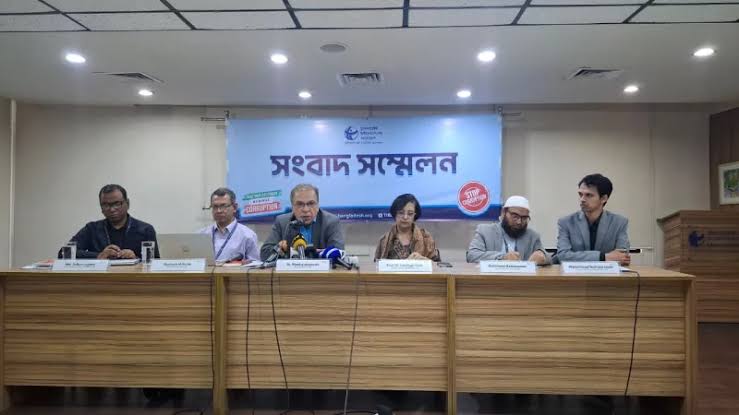
Transparency International Bangladesh (TIB) Executive Director Iftekharuzzaman has described the foundation laid by the interim government since the fall of the previous “authoritarian government” as fragile and unable to meet the people’s expectations for building a country based on justice, democratic values, and genuine reforms.
He concluded that the government’s “shortcomings outweighed its achievements”.
He made these remarks on Monday at a press conference at Midas Centre in Dhaka’s Dhanmondi. The event was organised to present the findings of a research study examining what people had expected after the fall of the previous “authoritarian government” and what they actually received.
“The framework established for state reforms—whether legal, constitutional, or based on other standards—carries many risks in terms of implementation,” said Iftekharuzzaman.
He described the infrastructure as “fragile” and sees little to no preparation to address the risks and to ensure reforms are implemented.
The research paper was presented at the press conference by Shahzada M Akram and Md Zulkarnain.
The anti-corruption watchdog noted that the government had made significant “progress and achievements” in four areas.
“The infrastructure for justice and elections has been established. The framework for state reforms has been created,” said Iftekharuzzaman.
However, he remarked that this infrastructure is “neither strong enough nor robust.”
The government has only come up with plans for reform without analysing the risks involved in their implementation or finding out ways to respond to the risks, he said.
“Political parties’ inflexible stance weakened the July National Charter."
Major political parties showed reluctance in their responses to recommendations that promised to ensure accountability in governance, he said.
Iftekharuzzaman found the reform of the judiciary to be the “most significant” among the initiatives taken by the government.
He noted that the judiciary has seen some significant progress, particularly in handling contempt and corruption cases, which he called “aggressive and exemplary” for Bangladesh.
However, he also noted slow implementation and procedural weaknesses.
“Misuse of money, muscle power, and religion is evident, raising questions about how free and fair the elections will actually be,” Iftekharuzzaman added.
He noted that the government has tried to depoliticise the administration by removing senior officials, moving from previous monopolistic control to a “triangular influence.” Some loyalists of the former government, however, remain.
Iftekharuzzaman said the interim government had failed to ensure the free flow of information in state institutions, despite public expectations and government commitments.
He also noted a lack of transparency, limited participation, and a culture of secrecy in decision-making. In addition, he spoke of the fragile law and order situation during the tenure of the interim government.
Speaking on mob violence, Iftekharuzzaman warned that if left unchecked, it would inevitably affect elections.
He criticised the government’s handling of mobs, saying the problem originated within the administration itself.
“The government’s moral authority to prevent mob violence has been weakened, and outside forces have been empowered as a result,” he added.
Editor & Publisher : Md. Motiur Rahman
Pritam-Zaman Tower, Level 03, Suite No: 401/A, 37/2 Bir Protik Gazi Dastagir Road, Purana Palton, Dhaka-1000
Cell : (+88) 01706 666 716, (+88) 01711 145 898, Phone: +88 02-41051180-81