05/04/2026

ADB's fossil fuel investments deepening Bangladesh's energy crisis
Shamiur Rahman Lipu | Published: 2025-12-08 15:26:24
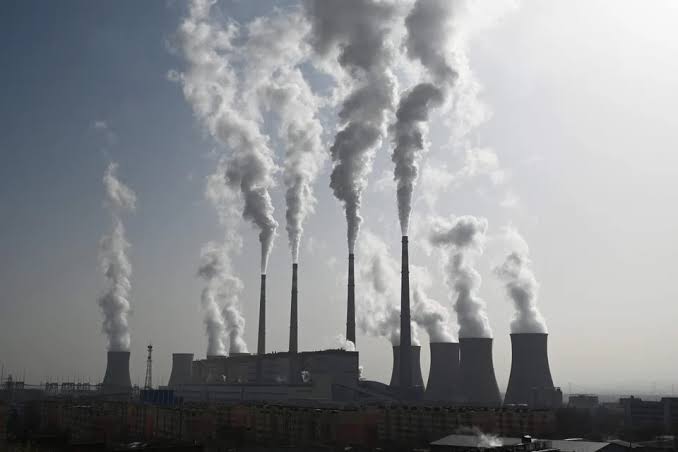
The Asian Development Bank’s (ADB) continued emphasis on fossil fuel projects is worsening Bangladesh’s economic, environmental, and energy vulnerabilities, according to new findings presented at the Bangladesh Energy Conference 2025.
Experts and civil society groups called for an urgent pivot toward renewable power, warning that the current investment pattern is locking the country into an expensive and unstable energy system.
The report, “MDBs in the Energy Sector of Bangladesh,” was presented by Fossil Fuel Campaigner and Coordinator at the NGO Forum on ADB Sarmin Akter Bristy, in a session. The event was moderated by the Forum’s Executive Director Rayyan Hassan on Sunday.
Hassan said ADB’s “fossil-heavy investment model” exposes Bangladesh to fuel shortages, rising debt, and heightened climate risks while clean energy remains severely underfunded.
In another session titled “Problems and Potentials of RE Application in Bangladesh,” experts highlighted how policy barriers and poor implementation continue to stall renewable energy growth despite significant potential.
Earth Executive Director Anwar Hossain noted that nearly 90% of household rooftop solar systems are non-functional, having been installed mainly for compliance rather than power generation. “If these were operational, a substantial volume of electricity could be added to the grid,” he said.
BSREA President Mostofa Al Mahmud said high upfront solar costs require strong financial incentives.
He pointed to “invisible barriers” in policymaking, citing delays in reducing tariffs on solar equipment. “Months have passed with no action. This suggests resistance from vested interests,” he said.
Energy finance researcher Sheikh Ruhul Amin added that Bangladesh’s 20-30% renewable energy target is still not considered “bankable” by major financiers, including the ADB. He warned that unrealistic targets pose financial risks unless aligned with investment viability.
Heavy gas investments, limited renewables
The NGO Forum’s analysis shows ADB has invested $17.34 billion across 106 energy projects in Bangladesh, including $5.995 billion for 36 gas-focused projects supporting 3,659 MW of capacity.
Most of this assistance is loan-based -- 60% from the Technical Assistance Special Fund, 36% from high-interest Ordinary Capital Resources (OCR), and only 4% from the Asian Development Fund.
Major investments include gas-fired plants like Bibiyana II (341 MW), Rupsha (800 MW), and Reliance Meghnaghat (715 MW), along with pipeline construction and sectoral development initiatives such as the Power System Master Plan.
Idle plants, rising costs
Despite the investments, several ADB-backed plants remain idle because of gas shortages and incomplete pipeline infrastructure.
The Rupsha 800 MW and Reliance 715 MW plants are fully built but non-operational, forcing Bangladesh to pay hefty capacity charges. “These plants represent the costliest form of energy insecurity,” Bristy said.
ADB-funded gas plants are projected to emit 174.71 million tonnes of CO₂ over their lifetimes. Built across more than 160 acres along ecologically stressed rivers, these projects have already triggered displacement, livelihood losses, and long-term social disruptions.
Renewables sidelined
While ADB has supported 3,659 MW of gas-based generation in Bangladesh, renewable energy financing remains marginal -- only 225.8 MW of solar worth $118 million, and no investments in wind.
Gas accounts for 91.34% of ADB’s energy portfolio in Bangladesh, compared with just 8.66% for solar.
On 24 November 2025, ADB approved amendments to its 2021 Energy Policy, opening the door to financing nuclear energy, critical mineral supply chains, carbon capture technologies, and methane reduction in fossil operations.
Experts warned these shifts could steer Bangladesh toward costlier and riskier technologies instead of low-cost, resilient renewable options.
They urged the government and development partners to prioritise clean energy, reset current targets, and remove policy barriers to ensure a sustainable and secure energy future.
Editor & Publisher : Md. Motiur Rahman
Pritam-Zaman Tower, Level 03, Suite No: 401/A, 37/2 Bir Protik Gazi Dastagir Road, Purana Palton, Dhaka-1000
Cell : (+88) 01706 666 716, (+88) 01711 145 898, Phone: +88 02-41051180-81