
- Business /
- BD's RMG exports decline across 26 countries

Golam Mowla
Published:2026-01-09 01:38:45 BdST
BD's RMG exports decline across 26 countries
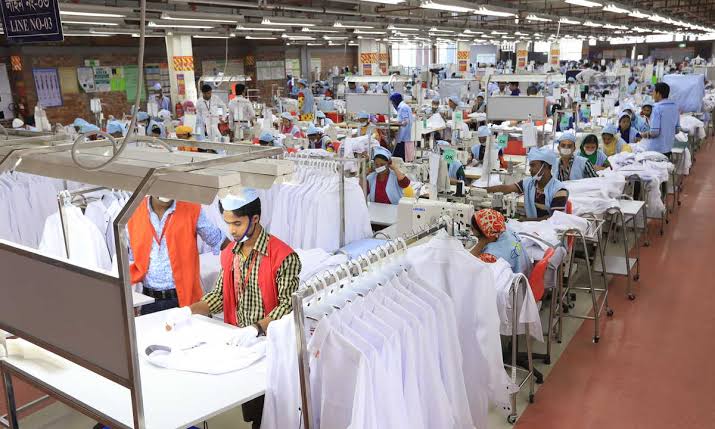
Warning signals are flashing across Bangladesh’s ready-made garment (RMG) industry, the undisputed lifeblood of the national economy.
In a sobering start to the current FY26, the sector has encountered significant turbulence.
Data from the first six months—July to December 2025—reveals that garment exports have declined in 26 countries, a development that has effectively stifled the momentum of the nation's primary export engine.
This negative trend, particularly pronounced in the traditional strongholds of Europe and the United States, has introduced a daunting new dimension of economic challenge.
According to the latest statistics from export promotion agencies and leading trade associations, total export earnings for this period stood at $19,365 million. This represents a 2.63% contraction compared to the same period in the previous year.
Analysts suggest this is not merely a statistical fluctuation but a reflection of a volatile global landscape defined by economic uncertainty, reduced consumer spending, runaway inflation, and aggressive price-cutting pressure from international buyers.
The implications are far-reaching, threatening not just the balance of payments, but the stability of the labor market and the livelihoods of millions.
The European Union (EU) remains the largest destination for Bangladeshi apparel, accounting for nearly half of all total exports.
However, the first half of the fiscal year saw earnings from the EU drop to $9,459 million—a 4.14% decline compared to the previous year.
The downturn was felt most acutely in major markets:
> Germany: Exports plummeted from $2,468 million to $2,187 million, an 11.4% drop.
> France: Earnings fell by 10.89% to $972 million.
> Denmark and Belgium: Saw significant contractions of 10.54% and 9.22%, respectively.
While giants like Germany and France retreated, some markets showed resilience.
Spain recorded a 6.18% increase, while the Netherlands and Poland saw growth of 1.85% and 9.43%, respectively.
Despite these gains, analysts warn that the overall sentiment in the EU remains fragile.
Buyers are increasingly price-sensitive; while orders continue to flow, the pressure to lower unit prices—combined with rising domestic production costs—has placed exporters in a precarious "margin squeeze."
Stagnation in the US
The United States, Bangladesh’s second-largest individual market, presented a picture of near-stagnation.
Exports to the US totaled $3,839 million, reflecting a marginal decline of 0.10%.
While knitwear exports managed a slight uptick, a dip in woven garment demand pulled the overall figure into negative territory.
Across the border, Canada offered a brighter spot with a 4.66% growth ($671 million), while the United Kingdom showed a steady 2.13% increase ($2,212 million).
While these gains provide a buffer, they are insufficient to offset the broader downward pressure exerted by the contraction in the EU and the stagnation in the US.
Non-traditional markets
The strategy of market diversification, long championed as the solution to over-reliance on the West, also faced a setback.
Exports to non-traditional markets fell by 5.52% to $3,185 million. Major declines were recorded in:
> Russia: -26.63% ($109 million)
> Turkey: -25.80% ($165 million)
> India: -10.44% ($337 million)
Conversely, China (+29.79%), Saudi Arabia (+22.84%), and the UAE (+12.89%) emerged as high-growth zones, underscoring the necessity of aggressive expansion in the East and Middle East to stabilize long-term growth.
Industry leaders voice alarm
Mohammad Hatem, president of the Bangladesh Knitwear Manufacturers and Exporters Association (BKMEA), believes the industry is at a crossroads.
“New tariff structures in the United States have disrupted global trade flows. It’s hitting the US market directly, and by extension, hitting us,” Hatem explained.
He further highlighted a growing competitive disadvantage: “Countries like India and China, blocked from the US by high tariffs, are pivoting to the EU. They are slashing prices to capture market share. Meanwhile, the Indian government is supporting its businesses with a new Rs7,000 crore assistance package. In contrast, our government has withdrawn cash assistance and export benefits, citing IMF requirements and LDC graduation. Without the renewal of these supports, we will see a wave of spinning mills and garment factories closing down.”
Echoing this concern, Mohiuddin Rubel, managing director of Bangladesh Apparel Exchange, noted that while the current "recessionary" phase is temporary, recovery requires a radical shift in strategy.
“We cannot rely on old methods. Innovative initiatives, digital marketing, and entering niche markets are the only ways to reclaim demand in Europe and the US,” Rubel said.
Individual exporters describe a "perfect storm" where production costs—driven by energy prices and wages—are rising, while global buyers demand cheaper goods.
The consensus among stakeholders is clear: relying on one or two markets is no longer a viable strategy.
Unauthorized use or reproduction of The Finance Today content for commercial purposes is strictly prohibited.