
- Health /
- Govt set to implement new project to digitise medical, nursing education

Staff Correspondent
Published:2025-12-08 14:44:15 BdST
Govt set to implement new project to digitise medical, nursing education
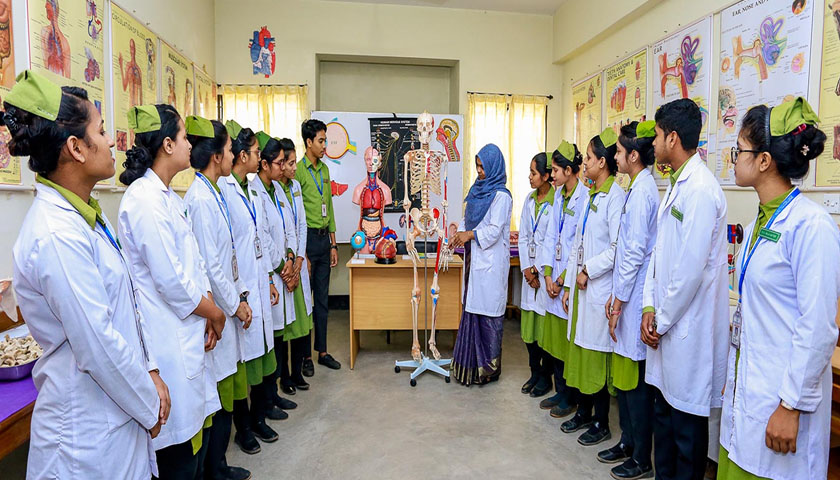
The government has taken a project aimed at streamlining and strengthening the management of medical, population and nursing education services across the country.
The project “Integrated Improvement in the Management of Activities of the Directorate General of Medical Education (DGME), NIPORT and the Directorate General of Nursing and Midwifery (DGNM)”, undertaken by the Health Education and Family Welfare Division of the Ministry of Health and Family Welfare, involves an estimated cost of Tk 211.90 crore .
It will be implemented between July 2025 and June 2026.
According to project documents, the initiative seeks to mainstream essential activities previously carried out under the Health, Population and Nutrition Sector Programme (HPNSP), which concluded its fourth phase in June 2024.
Although the sector programme played a central role in improving healthcare delivery since 1998, the ministry identified an array of structural limitations, including duplication of tasks and overlapping responsibilities across operational plans.
The proposed project aims to gradually transition critical activities from the HPNSP framework into the regular institutional structure of the health education and service system, ensuring continuity through a more stable and recurring budget.
The project intends to upgrade medical, nursing and midwifery education through modernised simulation laboratories in five government medical colleges, the development and customisation of ten software modules, and hands-on training programmes for faculty members in medical and dental colleges.
It will also strengthen digital record management for medical students, improve online-based e-library services and enhance the Performance Management Information System (PMIS).
Besides, the DGME will store and manage academic and administrative data under a unified digital platform, while the training provided through hospital management modules is expected to enhance service delivery and operational efficiency.
The programme also focuses on strengthening human resource and facility management.
The DGME, DGNM and NIPORT will introduce digital registries, automate hostel seat allocation and fee management, and upgrade utilities and administrative systems in education and training institutions.
Alongside 3,030 units of medical and surgical equipment, 145 computers, 2,397 educational tools, 2,696 pieces of furniture and 600 bedding sets will be procured to address existing shortages.
Ninety-six office equipment items will be purchased for improving workplace conditions.
NIPORT will implement a large portion of the training component.
The organisation is expected to deliver 600 batches of training, involving 15,000 participants across its 35 institutions, while the DGNM will conduct 320 batches for an additional 9,600 nurses and midwives.
The NIPORT will also update three training curricula, complete twelve unfinished studies under the fourth sector programme, and carry out two major national surveys: the Bangladesh Demographic and Health Survey (BDHS) and the Bangladesh Health Facility Survey (BHFS).
These data-driven activities are considered essential for evidence-based policy-making in health, population and nutrition planning, said officials.
Officials said the selection of project areas has been based on the administrative and operational jurisdictions of the three implementing agencies.
DGME activities will cover all government medical and dental colleges, IHTs and MATS institutions across all divisions.
NIPORT’s coverage includes its headquarters in Dhaka, fourteen Regional Population Training Institutes located at the district level, and twenty-one Regional Training Centres at the upazila level.
Nursing and midwifery institutions, as well as government hospitals with nursing staff across the country, fall under the DGNM component.
A pre-appraisal assessment reviewed the activities and expenditures of the three directorates under the previous operational plans and incorporated technical estimates verified by the Technical Specification Committee.
The Project Evaluation Committee (PEC), in its meeting held on 8 September 2025, recommended approval of the proposal subject to compliance with its observations.
The ministry has agreed to restructure the Development Project Proposal (DPP) accordingly.
The Planning Commission said the project will significantly contribute to improving medical, nursing and midwifery education while enhancing family planning services.
It added that the project aligns with Sustainable Development Goal 3, the Bangladesh Population Policy 2025 and the broader objectives of the Health Education and Family Welfare Division to ensure quality health education and affordable, high-standard family planning services for all.
Officials believe that once implemented, the project will help modernise competency-based clinical education, improve institutional transparency, support digital transformation across training facilities and contribute to strengthened health service delivery nationwide.
Unauthorized use or reproduction of The Finance Today content for commercial purposes is strictly prohibited.