
- National /
- Bangladeshi fishermen bear the brunt of Indian border policies

Mustafa Kamal Akanda
Published:2026-01-21 13:10:01 BdST
Battle for Justice at Sea || Diplomatic failures worsen humanitarian crisisBangladeshi fishermen bear the brunt of Indian border policies
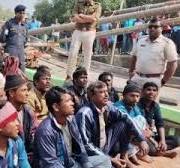
Lives of coastal fishermen hang in the balance amid diplomatic inaction
Bangladeshi coastal fishermen rely almost entirely on the sea for their livelihood. Fishing in the Bay of Bengal is more than just a source of income—it is the lifeline for thousands of families along the southern coast.
Yet, the sea, once a symbol of sustenance, has increasingly become a stage for a humanitarian crisis.
Over the past five years, the Indian Coast Guard has detained 20 to 30 Bangladeshi fishermen annually. In 2019, 32 fishermen were apprehended along the coasts of Cox’s Bazar and Chittagong.
In 2021–22, 27 fishermen were similarly affected. Most recently, on January 18, 2026, Indian authorities detained 24 fishermen along with the fishing vessel FB Safwan. During preliminary questioning, all confirmed their Bangladeshi nationality.
Most of these fishermen do not intentionally cross into Indian waters. Storms, poor visibility, navigational errors, net entanglements, or mechanical failures often force them across maritime boundaries.
Bangladesh’s small-scale fishing vessels are undersized, technologically limited, and lack modern navigation systems, leaving fishermen highly vulnerable whenever they venture into the sea.
In contrast, Indian fishermen often operate larger, technologically advanced vessels, and many regularly fish in Bangladeshi waters, particularly during breeding seasons. This uneven dynamic leaves small Bangladeshi fishermen economically exposed and socially vulnerable.
Despite repeated arrests, there is no permanent bilateral agreement or humanitarian protocol between the two countries. In this vacuum, humanitarian actors have tried to step in, coordinating with both governments and local networks to ensure safe repatriation and provide support to affected families.
These efforts demonstrate that ethical responsibility toward coastal communities can complement, though not replace, state action.
Steps Toward a Solution
• Establish a fishermen-friendly, expedited repatriation agreement between Bangladesh and India.
• Implement joint maritime patrols and surveillance systems to prevent unintentional crossings.
• Provide modern navigation tools and safer boats for Bangladeshi fishermen.
• Ensure effective law enforcement and diplomatic coordination to protect the rights of coastal communities.
It must be emphasized: these fishermen are not criminals. They venture into the sea to earn a living. Diplomatic inaction and rigid border policies repeatedly punish them for circumstances beyond their control.
For families dependent on the Bay of Bengal for survival, every trip to sea is fraught with risk. It is time for policymakers to align humanitarian concern with diplomatic action, crafting a lasting solution to this recurring crisis.
Without decisive measures, the hardships of Bangladesh’s coastal fishermen will continue, and their families’ tears will remain unrelieved.
Writer is a Development Analyst & Policy Researcher
Unauthorized use or reproduction of The Finance Today content for commercial purposes is strictly prohibited.