
- Politics /
- Gravely concerned for Khaleda Zia: Sheikh Hasina

Shamiur Rahman Lipu
Published:2025-12-10 14:21:10 BdST
IANS ExclusiveGravely concerned for Khaleda Zia: Sheikh Hasina
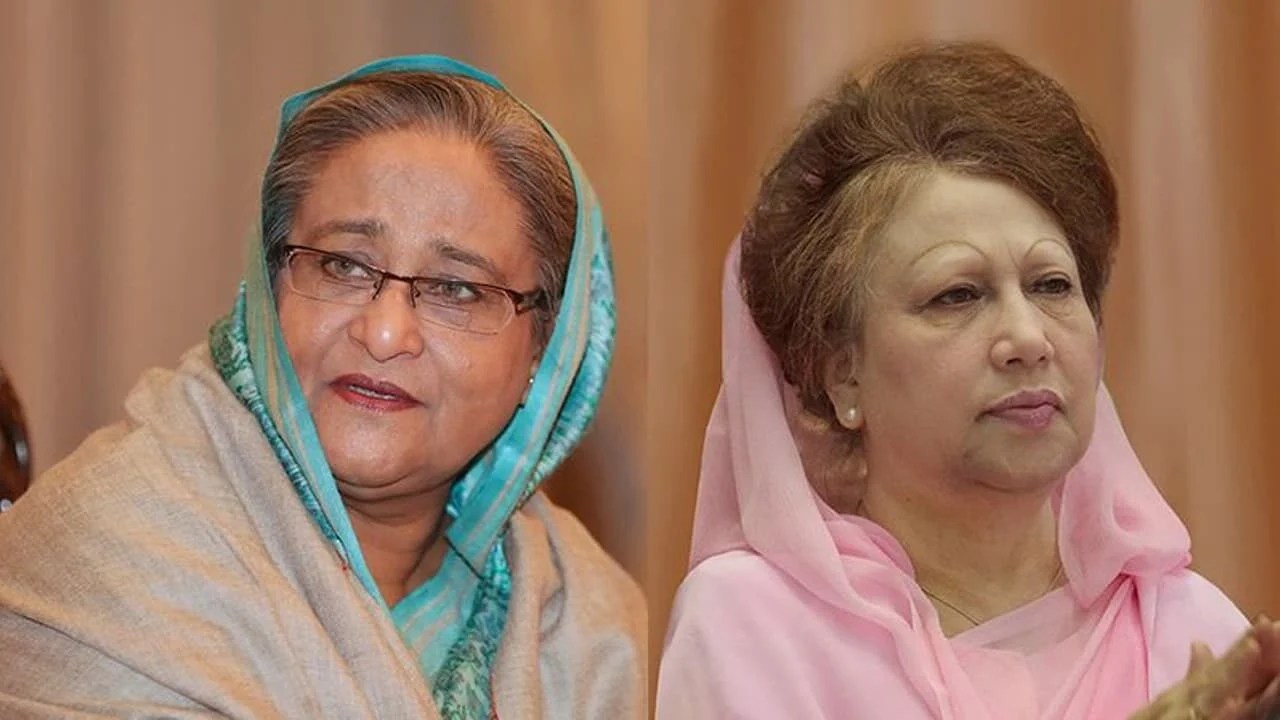
In a rare display of compassion amid one of South Asia’s most enduring political feuds, five-time Prime Minister and Awami League President Sheikh Hasina has voiced grave concern for the health of her longtime rival, BNP Chairperson Khaleda Zia, and offered prayers for her recovery.
The gesture comes as Sheikh Hasina, now in exile in India, reflects on a turbulent history marked by accusations, violence, and personal tragedies that have defined Bangladeshi politics for over four decades.
In an exclusive email interview with IANS published on Tuesday, Sheikh Hasina responded to questions about Khaleda Zia’s critical condition, as the Bangladesh Nationalist Party (BNP) leader is under heavy security in a Dhaka hospital.
Ousted prime minister Sheikh Hasina has expressed deep concern over the deteriorating health of Bangladesh Nationalist Party (BNP) Chairperson and former PM Khaleda Zia, wishing her a speedy recovery.
“I am gravely concerned to hear that Begum Khaleda Zia is ill and will pray that she can make a recovery,” Hasina stated simply, avoiding any reference to their bitter past.
Khaleda Zia, 79, has been battling multiple long-standing ailments, including cardiac complications, diabetes, arthritis, liver cirrhosis, and kidney problems.
She remains under intensive observation in the Coronary Care Unit (CCU) of Dhaka’s Evercare Hospital, where both local and international specialist doctors are overseeing her treatment.
According to medical sources, Zia was admitted to Evercare on the night of 23 November on the advice of her medical board after being diagnosed with infections affecting her heart and lungs. As her condition worsened, she was shifted to the CCU on 27 November for round-the-clock monitoring.
Meanwhile, plans to airlift her to London for advanced medical treatment have faced delays. Local media, quoting BNP Secretary General Mirza Fakhrul Islam Alamgir, reported on Friday that the special air ambulance arranged through the Emir of Qatar could not land in Dhaka due to technical issues.
“The air ambulance is not arriving today because of a technical issue. If everything goes well, it may reach Dhaka on Saturday,” Fakhrul told UNB.
He added that the decision on whether Khaleda Zia can travel will depend entirely on her medical condition.
“A medical procedure will be done today, after which the doctors will decide whether she is fit to fly. Everything depends on her health. If Madam is fit for the journey and the medical board gives approval, then she will fly on Sunday (7 December),” he said.
Earlier on Thursday, Khaleda Zia’s personal physician and BNP Standing Committee member A Z M Zahid Hossain had said she was initially expected to fly to London on Friday for advanced treatment, subject to medical clearance.
In Bangladeshi politics, Khaleda and Hasina are known as the “two leaders”. The two of them combined have served as prime minister for more than 30 of Bangladesh’s 54-year history. At one time, their hostile relationship was portrayed in foreign media as the “Battle of the two Begums”.
The rivalry between Sheikh Hasina and Khaleda Zia has been punctuated by dramatic and often violent episodes. In 2004, during Zia’s premiership, a grenade attack targeted an Awami League rally led by Sheikh Hasina in Dhaka on August 21, killing 24 people and injuring over 500, including Hasina herself.
Sheikh Hasina and her supporters have long accused elements linked to the BNP, including Zia’s son Tarique Rahman, of orchestrating the assault with involvement from militant groups like Harkat-ul-Jihad-al-Islami (HuJI) and Jamaat-ul-Mujahideen Bangladesh (JMB). A 2018 court under Hasina’s government sentenced 19 to death, including figures associated with the BNP, but in December 2024, Bangladesh’s High Court acquitted all 49 previously convicted, citing flaws in the investigation.
Other allegations have flown both ways. Hasina has claimed that Khaleda Zia’s administration tolerated or enabled militant activities, including bomb plots by HuJI and JMB aimed at destabilising her opposition.
Khaleda Zia, in turn, has denied these charges, and her supporters point to Sheikh Hasina’s own controversial war crimes tribunal, established in 2010 to prosecute 1971 Liberation War collaborators, as a tool for political vengeance. The tribunal, which Sheikh Hasina promised during her 2008 campaign, led to the executions of several Jamaat-e-Islami leaders allied with the BNP.
Under the Awami League's rule, Khaleda was sentenced to prison in a corruption case in 2018. Two years later, Hasina conditionally suspended her sentence during the COVID-19 pandemic.
After that, Khaleda had to be hospitalised several times. Although her family and her party had wanted to take her abroad for treatment, Hasina's government did not allow it. On the contrary, Hasina even criticised Khaleda's hospital visits in a public press conference.
Awami League leaders blamed Khaleda's BNP government for the attempted assassination of Hasina in a 2004 grenade attack. The BNP, for its part, has also blamed Hasina for Khaleda's illness.
Unauthorized use or reproduction of The Finance Today content for commercial purposes is strictly prohibited.