
- National /
- The guerrillas who rattled Dhaka

Shamiur Rahman Lipu
Published:2025-12-17 03:33:22 BdST
Crack Platoon: Vanguard of BD’s independenceThe guerrillas who rattled Dhaka
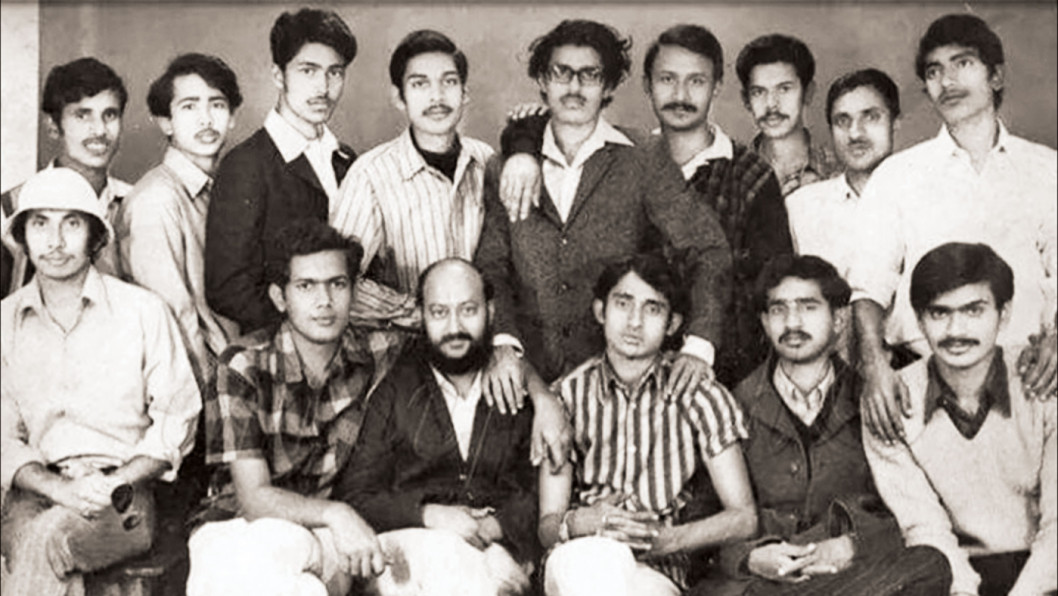
Bangladesh belongs to a select group of countries that fought their way to independence. We won our freedom by winning a fierce nine-month Liberation War against a very well trained, well-armed Pakistan Army.
We remember with solemnity and gratitude the sacrifice of the millions of our people who achieved martyrdom, who were assaulted, brutalised and raped by the occupation army and had to flee their homes during the war.
The occupying Pakistani Army brutalised us because they wanted us to surrender to them. Instead, the Pakistani Army’s 93,000 soldiers laid down their arms on December 16, 1971, in one of the largest surrenders in history.
On that day, Bangabandhu’s Declaration of Independence of Bangladesh on March 26, 1971, became a reality.
In the 1971 Liberation War, we were victors, not only victims. Alongside paying homage to our people’s immense sacrifice, we must also equally celebrate the pride and glory of our Mukti Bahini—the Bangladesh liberation army—in achieving victory and making independence a reality.
To say this is not to diminish the contribution of the Indian armed forces’ leading role in achieving victory, for which we will always be indebted. It is, instead, to highlight the critical role that the Crack Platoon played.
Crack Platoon's influentinal role and sacrifice; The Mukti Bahini’s victory with the aid of allied Indian forces in December 1971 was precisely analogous to the American Revolutionary Army’s victory over the British Army in October 1783, aided by their allies, the French Army and Navy.
We need to reach a more profound appreciation of the strategic role played by the Crack Platoon in achieving victory. They were not merely auxiliaries as depicted in several Indian accounts, and as even some Bangladeshis believe.
In nine months of war, Crack platoon's attacks in Dhaka systematically destroyed the Pakistani Army’s morale and supply routes and restricted their mobility.
The massive success in the guerrilla attack and the sacrifice of the Crack Platoon shattered the morale of the Pakistani military in Dhaka. As a result, the lightning-like operation of the Allied forces accelerated the victory and liberation of Bangladesh.
The Finance Today's this article highlights the immense bravery, heroism and sacrifice of the brave soldiers of the Crack Platoon, who played a glorious role in the Liberation War of Bangladesh.
Context of forming Crack Platoon
During the Liberation war, World Bank sent a mission to observe the situation in East Pakistan at June, 1971. The media cell of the Pakistani Government was circulating a news that situation in East Pakistan was stable and normal.
In that crucial moments, Mukti Bahini was desperately wants to present the real scenarios of the genocide carried out by the Pakistani army in East Pakistan to the world.
Moreover, Pakistan at that time, was expecting economic aid from World Bank, which was assumed to be spent to buy arms.
Mukti Bahini wanted to force World Bank Mission to stop sanctioning the aid considering the true situation of East Pakistan..
Major objectives of Crack Platoon
The basic objectives of Crack Platoon were to demonstrate the strength of the Mukti Bahini, by fighting the Pakistani Army and their collaborators. Another major objective was proving to the international community that the situation in East Pakistan was not normal.
Crack Platoon's commando team also aimed at inspiring the people of Dhaka who were frequently being victims of killing and torture. These objectives were successfully fulfilled by Crack Platoon.
Formation & Deployment
It is mentionable that Major Khaled Mosharraf; commander of Sector 2 and the K Force, planned to form a special commando team and to deploy them in Dhaka. The task assigned to the team was to carry out commando operations and activities there.
To this end, Khaled Mosharraf recruited a group of highly motivated youths who knew the entire Dhaka city like the palm of their hands. This skilled urban guerrilla unit known as crack platoon; led by Captain ATM Haider was formed in Melaghar of Tripura in May, 1971.
Under Major Mosharraf's direction, these young fighters trained in urban guerrilla warfare and intimately familiar with Dhaka, specialised in swift “hit-and-run” operations.
On 3 June night, 17 guerrillas well-equipped with grenades, bayonets, 20 pounds of explosives and minimal funds infiltrated to the then East Pakistan border from Tripura, India.
Risking their lives; These guerrillas reached Dhaka on 5 June after a breathtaking and extremely risky journey. Later, they announced their presence with the powerful and daring attack at the Intercontinental Hotel.
Hotel InterContinental: First attack of Crack Platoon
During the Liberation War of 1971, the Hotel InterContinental stood as a glittering symbol of Western luxury in the heart of Dhaka.
At the time, Prince Sadruddin Aga Khan, then the United Nations High Commissioner for Refugees, along with UN representatives and senior officials from the World Bank and other international aid agencies, was staying at the hotel.
On the evening of 9 June 1971, six young men with a hijacked Datsun 1000 car stopped in front of the Hotel InterContinental around 6:30pm. Shahidullah Khan Badol was driving the car and Kamrul Huq Shopon, Habibul Alam, Masud Sadek Chullu, Mofazzal Hossain Chowdhury Maya and Ziauddin Ali Ahmed were carrying three hand grenades each. They stopped the car near the hotel and observing security arrangement carefully.
Their mission was to explode grenades in the vicinity of the hotel -- five grenades on the roads leading to Sadarghat and five more on the roads that led to Kamalapur Railway Station from the hotel.
Those six brave youths were informed that Prince Sadruddin Aga Khan and other top officials of international organisations would be given a tour around the city by Pakistani officials to assure that there was no war going on in East Pakistan and the situation in Dhaka (then Dacca) was peaceful and under-control.
Around 7:00pm, two buses transporting those foreign delegates were entering the hotel premises through the main entrance that was fitted with a revolving door. This meant only one person could enter the hotel at a time.
Maya and Alom came out and took positions behind two large trees adjacent to the hotel, unpinned two grenades and threw them onto the roads leading to the hotel. A few minutes later, they threw two more grenades.
Without waiting, they jumped back into their car and sped away as all four grenades exploded in deafening blasts.
By then, a large crowd formed at the hotel entrance as the buses moved away. Suddenly, the entire area was rocked with the explosion of the four grenades. People, frightened for their lives, scattered everywhere. The lavish ambience of the hotel turned to a mayhem, amid the smell of gunpowder and screams of panic-stricken people.
Soon after escaping the hotel, the guerillas drove towards Moghbazar towards the residence of a Jamaat-e-Islami leader where a meeting of the Peace Committee was going on. After arriving the area, they threw three grenades outside the house. They then drove fast towards the offices of two prominent daily newspapers of the time -- the Daily Pakistan and Morning News and thrown two more grenades. Later, they fled into the alleyways of Purana Paltan neighbourhood.
The attackers were members of the Crack Platoon, a specially trained guerrilla unit that shook the Pakistan army and shattered its propaganda of “normalcy”, particularly in Dhaka.
That very night, the BBC and the Voice of America reported that in a devastating guerrilla attack on the Hotel InterContinental, eight to nine people were killed and 30 to 35 others seriously injured.
Hearing the news of three attacks, Major Khaled Mosharraf jumped from his chair and told Captain Abu Taher Mohammad Haider, "These are all crack (crazy) people. I told them to launch the attack a few kilometres away from the hotel so that they could only hear the sound of explosions. Now, see what they have done? They threw the grenades right into the hotel. How dare they! They all are cracks."
Khaled's words soon spread all over the Melaghor camps. From then on, Dhaka Platoon number 3 came to be called Crack Platoon with much reverence.
From June till August, the Crack Platoon guerillas left the Pakistan forces stunned, clueless and alarmed by launching several raids against them at highly secured locations in Dhaka.
At the time, the Pakistan government sought to portray the freedom fighters as mere miscreants, attempting to prevent the international community from learning about the Bengali struggle for independence. Dhaka was placed under heavy security to conceal the reality on the ground.
Despite tight security at locations such as the Hotel InterContinental and the Farmgate checkpoint, the guerrillas of Crack Platoon continued to strike army convoys and key installations successfully. Subsequent attacks near the Chinese Embassy and at the residence of Justice Abdul Jabbar Khan further unsettled the Pakistan army.
In retaliation, The Pakistan forces launched combing operations, engaged spies and detectives to locate the guerillas' hideouts and capture them. Lucrative rewards were announced on the guerillas' heads.
Terrifying nights of AUG 29, 30
On 29 and 30 August, the Pakistan army launched combing operations in different parts of Dhaka city targeting guerilla fighters.
On August 29 alone, the Pakistan army conducted raids at 44 houses in Dhaka to capture the Crack Platoon members, and arrested more than 30 guerillas and their relatives.
Those captured included Badiul Alam, Abdus Samad, Azad, Jewel, Bashar, Sekandar, Manowar, Shafi Imam Rumi, Masud Sadek Chullu, Azizus Samad, Syed Hafizur Rahman, Altaf Mahmud, Abul Barak Alvi, Linu Billah, Dinu Billah, Nuhe Alam Billah and Khairul Alam Billah.
Lured by the rewards, Badiul Alam Badi's friend Farid, who was an activist of NSF, a pro-Pakistan student group, informed the Pakistan army about Badiul's whereabouts.
On August 29, 1971, Badi was playing cards with his friends Farid, Jafor and Parvez at the residence of Jalal Uddin, principal of Dhaka College, around 11:30am when the Pakistan army surrounded the building.
The soldiers captured Badi from that home despite his attempt to escape.
"Farid, son of Jalal Uddin, is the culprit who betrayed Badiul," said Linu Billah, a member of Crack Platoon.
The soldiers tortured Badi after taking him to MP Hostel, Pakistan army's torture cell. He, however, did not reveal any information about his comrades.
With Farid's information, the army arrested another Crack Platoon member Abdus Samad from Eskaton and took his wife and daughters hostage. After hours of brutal torture, Pakistan army offered Samad to release his family if he revealed information of his comrades. At one point, Samad gave in to the pressure and revealed all the information.
Samad, who played a crucial role in several Crack Platoon operations, knew almost all the members. Based on his information, the Pakistan army raided a building at Moghbazar to capture Magfur Uddin Chowdhury, Abdul Halim Jewel.
Kazi Kamal Uddin, who was also there, fired at the Pakistani soldiers and managed to flee. However, Azad, Jewel, Abul Bashar, Sekandar Hayat Khan and Monowar were captured.
Masud Sadek Chullu was later arrested from a house in the Elephant Road area around 2:00am. Shafi Imam Rumi, Saif Imam Jami, Sharif Imam and all the male members of Jahanara Imam's family were arrested the same night.
Azizus Samad was arrested from his Purana Paltan residence, while Shamsul Huq and Abul Bashar were arrested from Malibagh and Farmgate respectively.
Syed Haizur Rahman was arrested from his Eskaton residence late at night. Composer Altaf Mahmud, Abul Barak Alvi, Linu Billah, Dinu Billah, Nuhe Alam Billah, Khairul Alam Billah and six other members of the resistance were captured by the Pakistan army at dawn.
After their arrest, the guerrillas were taken to a military torture cell at the MP Hostel near the Nakhalepara drum factory, where they were subjected to brutal torture.
Some later managed to return from the torture cells. However, several fearless Crack Platoon fighters - including Badi, Rumi, Azad, Jewel, Hafiz, Altaf Mahmud, Bokor, Bashar, Basar, Baki and Sekandar Hayat Khan - never returned.
2nd phase of Crack Platoon operations
Despite these losses, operations continued. The setbacks on August 29 and 30 could not stop the Crack Platoon members from launching new raids. Fresh reinforcements trained at Melaghar joined the campaign, enabling renewed attacks across Dhaka and its surrounding areas, including Jatrabari, Gopibagh, Madartek, Gandaria, Basabo, Badda, Uttarkhan and Dakshin Khan.
By late September, around 400 guerrillas raided a 30km area from Savar Radio Station to Boral Bridge of Manikganj and forced 319 members of Razakar (known as collaborators of Pakistan army) to surrender across a 30-kilometre stretch from the Savar Radio Station to Baral Bridge in Manikganj.
At that time, the fighters' mission was to isolate Dhaka from other districts by destroying the road communication network and disrupt the Pakistan army's logistics supply routes, while also raiding Pakistani Army's strongholds in and around Dhaka city.
Crack Platoon's destructive operation takes 8 Pakistan Army commissioned officers from the rank of Second Lieutenant to Colonel and 31 soldiers and NCOs life.
The guerrillas attacked lorries near the Savar Radio Station, destroyed a petrol pump at Kakrail Mor and carried out operations at the DIT building and the Muslim Commercial Bank to raise funds for the Shimulia training camp.
In November, amid Pakistan army operations against them, the guerillas launched intense counter offensives. They packed explosives in a car and drove it in between two Pakistani army trucks stationed near Baitul Mukarram mosque, and detonated it remotely, leaving 16 Pakistan soldiers dead on the spot.
All academic activities of Dhaka University were stopped after the guerillas placed explosives in the university's buildings
The guerillas completely annihilated a section of Pakistani troops in a fierce battle when they went to destroy the rail tracks in Malibagh. The guerillas also raided the main radio centre at Shahbagh and killed some of its guards.
On 11 December, the guerrillas carried out a highly successful operation at the US Information Service building, while simultaneously attacking the Gul Textile Mill. The recovery of the bodies of 27 Pakistani soldiers marked a decisive phase in the campaign in Dhaka.
"War of a thousand cuts" strategy
During the war, some guerrilla fighters' mission was to isolate Dhaka from other districts by destroying the road communication network and disrupt the Pakistan army's logistics supply routes, while also raiding Pakistani Army's strongholds in and around Dhaka city.
Crack Platoon operated multiple successful attacks against power infrastructure at the time. These attacks were part of a broader strategy of urban guerrilla warfare and sabotage aimed at disrupting West Pakistan's control and military lines of communication.
The Dacca (Dhaka) electrical power station was reported knocked out by Bengali insurgents in early July 1971, causing a city-wide blackout. Another power plant in Comilla, a key town and junction, was also reported knocked out, leaving the area without power for over a week.
This caused severe problem for Pakistan Army and the military administration in Dhaka. The Chinese restaurants in Dhaka had become almost prohibited for Pakistani army officers.
Later, guerrillas successfully destroyed the power plant in Satkhira and the power sub-station at Maduna Ghat in Chattogram, disconnecting power to the port area.
The Crack Platoon guerillas were virtually invisible and undetectable among common people. They would vanish in thin air after their raids.
Hideouts of Crack Platoon
A number of buildings in Dhaka became main hideouts of the Crack Platoon guerillas, which they also used as supply depots and communication centres. Most of these houses have already been demolished to make way for modern structures.
Addresses of some of these buildings are: 2/1 RK Mission Road, residence of Ajijus Samar; 20 Haatkhola Road, residence of Shahadat Chowdhury; 19 Haatkhola Road; 7 Bhagabati Banerjee Road; 370 Outer Circular Road, Rajarbagh, residence of Shahid Altaf Mahmud; 1/3 Dilu Road, residence of Habibul Alam; 1 Tenement House, Elephant Road, residence of Masud Sadek Chullu; 355 Elephant Road, Jahanara Imam's residence; 20 New Eskaton, rented apartment of Shahid Hafij; 1 Bhagabati Banerjee Road, residence of Nazrul Islam; residence of Dilara Hashem at Dhanmondi 28; and residence of Musleha Muslim in Dhanmondi road number 4.
Besides, renowned poet Sufia Kamal's residence at Dhanmondi 32 was used as a rallying point of the guerillas.
During Pakistan army raids between August 29 till end of September, the Crack Platoon lost 21 of their hideouts.
In the second phase, the guerillas extensively used Joly's home at Nawroon Colony, Nurul Rahman's residence at 11/B Dhanmondi, and Dilu's home at 162 Fakirapool.
A newspaper called 'GUERILLA'
Some Crack Platoon members had the task to publicise their operations to inform the foreign missions in Dhaka about the war. They published an English newspaper named "Guerilla" twice a month, using a cyclostyle machine that was snatched from Shegunbagicha High School.
The newspaper, published for a total of seven issues throughout the war, featured stories and reports about the warfront and was secretly delivered to the every embassies and high commissions in Dhaka by the guerillas.
Recognition and awards
The role of Crack Platoon in the Bangladesh Liberation War was highly appreciated by the post war government of Bangladesh and the people.
Six commandos including Mofazzal Hossain Chowdhury, the leader of Crack Platoon and a former minister were awarded Bir Bikrom, third highest gallantry award in Bangladesh and two commandos were awarded Bir Protik, fourth highest gallantry award in Bangladesh.
Unauthorized use or reproduction of The Finance Today content for commercial purposes is strictly prohibited.