BD seeks ADB support for Gender-Responsive Social Protection, Elderly Care
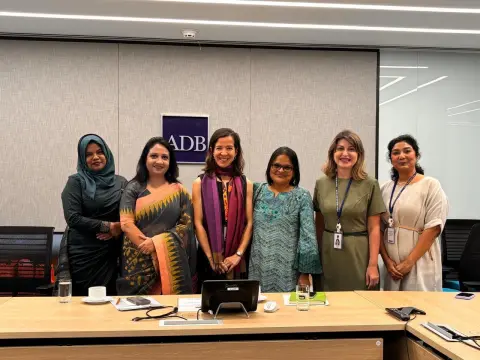
The issues were discussed at a high-level meeting at ADB headquarters on October 5 between Bangladesh’s State Minister for Social Welfare Farzana Sharmin and senior officials of the Manila-based development lender’s Gender Equality Division
Bangladesh has sought expanded support from the Asian Development Bank to strengthen gender-responsive social protection, professionalise the care economy and prepare for the country’s rapidly changing demographic profile, including a growing elderly population.
The issues were discussed at a high-level meeting at ADB headquarters on October 5 between Bangladesh’s State Minister for Social Welfare Farzana Sharmin and senior officials of the Manila-based development lender’s Gender Equality Division.
The discussions centred on three areas where Bangladesh hopes to deepen cooperation with the ADB: improving the gender responsiveness of the government’s Family Card programme, developing a professional care workforce and expanding social protection for communities facing heightened economic and geographic vulnerability.
The Bangladesh delegation, led by Honorable State Minister Farzana Sharmin, MP and Additional Secretary Nargis Khanam was joined by ADB Bangladesh’s Principal Social Development Officer (Gender), Nasheeba Selim. ADB delegation was represented by Keiko Nowacka, Director of the Gender Equality Division (CCSD); Ketevan Chkheidze, Gender Specialist and South Asia Regional Gender Focal; and Tahrima T. Ahmed, Social Development Officer (Gender).
Family Card at centre of gender agenda
A key focus of the talks was Bangladesh’s Family Card initiative, which the government is positioning as a major platform for delivering social protection to households.
Farzana Sharmin highlighted the programme’s gender-focused design and discussed the possibility of ADB technical assistance to strengthen its implementation from a gender-responsive perspective.
The household-based programme gives priority to mothers or female heads of households as primary beneficiaries. It combines direct financial assistance with subsidised essential commodities and is intended eventually to evolve into a broader platform through which households can access a range of social protection services.
The government is now preparing to expand the programme nationwide, with a target of reaching 4.1 million households within the next year.
The scale-up has raised the importance of getting beneficiary selection, coverage and delivery mechanisms right, particularly for women and households facing multiple forms of vulnerability.
The state minister said ADB support could help Bangladesh improve the targeting and responsiveness of its social protection system as the Family Card programme expands.
Ageing population puts care sector in focus
The discussions also highlighted an issue that is becoming increasingly important for Bangladesh: how to meet the care needs of an ageing population. The two sides discussed professionalising the country’s care sector, both to respond to rising domestic demand for long-term care and to create opportunities for Bangladeshi caregivers to secure employment overseas.
For Bangladesh, developing a skilled care workforce could therefore serve a dual purpose — addressing an emerging domestic social challenge while creating a potential source of overseas employment.
The state minister also pointed to the forthcoming joint ADB publication, “The Long-Term Care Diagnostic for the Elderly Population,” which is expected to provide recommendations for dealing with the country’s growing demand for elderly care.
Focus on women and vulnerable communities
The talks also considered targeted measures for groups that remain particularly exposed to economic and social exclusion. These include older women, people living in geographically vulnerable areas such as riverine chars, and workers in tea-garden communities.
The emphasis reflects a broader shift in Bangladesh’s social protection agenda from simply expanding coverage towards improving whether programmes actually reach those most at risk of being left behind.
Following the meeting with the Gender Equality Division, the Bangladesh delegation met Ayako Inagaki, deputy director general of the ADB’s Sectors Department, to discuss the country’s changing social protection priorities.
Farzana Sharmin acknowledged the ADB as an important development partner and stressed the need for greater support as Bangladesh confronts demographic pressures, particularly population ageing and the growing need for long-term care.
From research to implementation
The discussions also pointed to a potential new phase of cooperation in which ADB research and technical expertise could be translated into country-level programmes.
The state minister emphasised the role of the ADB’s Bangladesh Resident Mission in maintaining sustained policy dialogue with the Ministry of Social Welfare and ensuring that analytical work feeds into practical policymaking.
Such cooperation could bring together three areas that are increasingly interconnected: social protection, long-term care and workforce development. For Bangladesh, the challenge is no longer simply to identify emerging social risks but to build systems capable of responding to them at scale.
The proposed collaboration could allow the government and ADB to pilot new approaches, assess their effectiveness and expand those that work — particularly as the country prepares for a demographic landscape in which ageing, care responsibilities and women's economic participation will increasingly shape social policy.
Shamiur Rahman