
- Economy /
- Tk45,000cr's Wasteful project in primary education

Shamiur Rahman Lipu
Published:2026-01-19 10:54:44 BdST
Tk45,000cr's Wasteful project in primary education
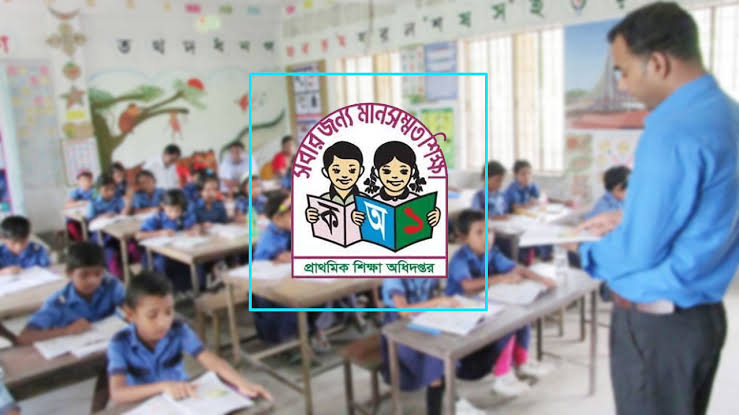
The Department of Primary Education has taken up a project in the name of improving the quality of primary education, wasting 45,000 crore taka. Before the Primary Education Development Program-PEDP-4 was completed, questions have been raised in various quarters about taking up another project with a big budget amid economic tensions.
It is learnt that this program will be implemented outside the existing development projects in the next five years.
The Ministry of Education says that the project, called PEDP-5, aims to build an inclusive, equitable, sustainable, and high-quality primary education system, where every child will acquire strong foundational literacy and numeracy skills and develop into citizens with the necessary skills for the 21st century.
However, the analysis of the Development Project Proposal (DPP), cost structure, past experience, and recent educational indicators raises questions—will this program truly be able to solve the learning crisis, or will it be a repeat of previous costly and fruitless projects?
Planning Advisor Dr. Wahiduddin Mahmud said, there is a major negligence in improving the quality of primary education. The project is only providing infrastructure, children are not learning anything. This is because PEDP-5 has sent the deadline for RADP. There is no plan.
Through this program, the goal is to eliminate the long-standing learning deficit in primary education, ensure 100 percent net enrollment from the current 94.55 percent, increase the primary education completion rate from 84 percent to over 90 percent, and bring nearly two hundred thousand children who have dropped out or are out of school back into the education system.
The Ministry of Primary and Mass Education (MoPME) has already sent the Development Project Proposal (DPP) of PEDP-5 to the Planning Commission and the Economic Relations Division (ERD).
A senior official of the Planning Department said that the National Economic Council (NEC) in its latest meeting approved the inclusion of this program in the list of unapproved projects in the Revised Annual Development Program (RADP) for the current fiscal year.
According to the DPP, the total cost of PEDP-5 is estimated at Tk 45,000 crore. Of this, about Tk 30,000 crore will come from government funds and the remaining Tk 15,000 crore will come from foreign loans and grants. A major part of the financing is dependent on loans from the World Bank and ADB, as well as grants from UNICEF, JICA, GPE, UNESCO and other development partners. This means that with the implementation of this program, the burden of foreign debt will also be placed on future generations.
The DPP states that the target of PEDP-5 is to achieve 70 percent proficiency in Bengali and 60 and 50 percent proficiency in mathematics in grades 3 and 5, respectively. It also promises to achieve 100 percent enrollment in pre-primary education, increase the net enrollment rate to 100 percent in primary education, reduce the dropout rate from 16.25 percent to 10 percent, and increase the student attendance rate from 87.45 percent to 93 percent. There is also a target of increasing the teaching time in single-shift schools by 20 percent.
While these goals are ambitious on paper, the reality paints a different picture. Almost similar goals were set in the previous four PEDPs. But despite spending about Tk 33,473 crore on the third and fourth PEDPs over the past decade, the desired improvements have not been achieved.
The Bangladesh Multiple Indicator Cluster Survey (MICS) 2025 showed that most students in grades two and three are severely lagging behind in reading and mathematics.
The survey shows that only 24 percent of children have basic reading skills and only 39 percent can read 90 percent of the words in a short story correctly. About 30 percent of children can answer basic and inferential questions. In mathematics, figures are more worrisome. Only 18 percent of students have basic numeracy. Only 36 percent can add and subtract and only 31 percent can read numbers. In such a reality, the cost structure of PEDP-5 is even more worrisome.
The DPP analysis shows that a huge amount of money has been allocated for infrastructure construction and administrative sectors. A target has been set to increase about 25,000 single shift schools across the country. It has been said that the rate of government primary schools meeting child-friendly standards will be increased from 72.5 percent to 92 percent. There is a proposal to spend thousands of crores of taka on construction of WASH facilities, safe water sources, boundary walls, WASH blocks and new buildings. About 7,875 crore taka has been allocated for construction of non-residential buildings in the infrastructure sector alone.
On the other hand, the outcomes framework for the areas that are most critical for qualitative change in teaching—teacher training, classroom-based support, and assessment of learning outcomes—is unclear.
The Diploma in Primary Education (DPED) has been proposed as a pre-service teacher training, where 7,000 students will undergo training. There are also plans to form a National Teacher Certification Authority. However, although the training and CPD framework was in place in the previous PEDP, its practical reflection in the classroom was limited—a reality that was not properly acknowledged in the DPP.
The DPP calls for decentralization and data-based decision-making. It aims to strengthen planning at the upazila and district levels, establish 19 regional offices, and interconnect IPEMIS with other data systems. But the experience of PEDP-4 shows that even though there is data, a culture of decision-making using it has not been developed. Local realities have been neglected due to centrally imposed projects.
PEDP-5 is also not convincing on the issue of equity and inclusion. Although special strategies are mentioned for children from hilly areas, pasture areas, urban slums, disabled and minority language speaking children, their reflection in budget allocation is weak. However, NSA and MICS have shown that children from poor and marginalized families are the most affected by the learning crisis.
A similar picture emerges in the evaluation of PEDP-4. Despite the increase in infrastructure and enrollment, learning has not improved. About 16 percent of the funds have remained unused. There is a shortage of teacher capacity, inclusive and classroom-based support. Yet, without a deep analysis of that failure, PEDP-5 is being taken on a larger scale.
Professor Dr. Abdus Salam, a teacher at the Institute of Education and Research, Dhaka University, believes that although there is monitoring of administrative matters in primary education, there is a huge lack of effective monitoring in academia.
He said, most of the initiatives taken in the education sector in the past decade and a half were based on political considerations. Due to this, the expected improvement in the learning quality and skills of students has not taken place. Buildings have been constructed in various projects. In some cases, various irregularities have been alleged in the procurement. As a result, these projects have not been able to play a practical role in the development of education.
Dr. Mustafa K. Mujeri, Executive Director of the Institute for Inclusive Finance and Development, said, "To achieve quality education, it is necessary to increase the number, qualifications and training of teachers. Infrastructure development alone is not enough. Qualitative change in education is not possible without the recruitment and training of skilled teachers. To ensure quality education, it is necessary to increase the number, qualifications and training of teachers."
Unauthorized use or reproduction of The Finance Today content for commercial purposes is strictly prohibited.