
- National /
- Save water bodies, prevent groundwater depletion

Mustafa Kamal Akanda
Published:2026-06-05 21:00:24 BdST
Speakers' demands at the World Environment Day 2026 human chainSave water bodies, prevent groundwater depletion
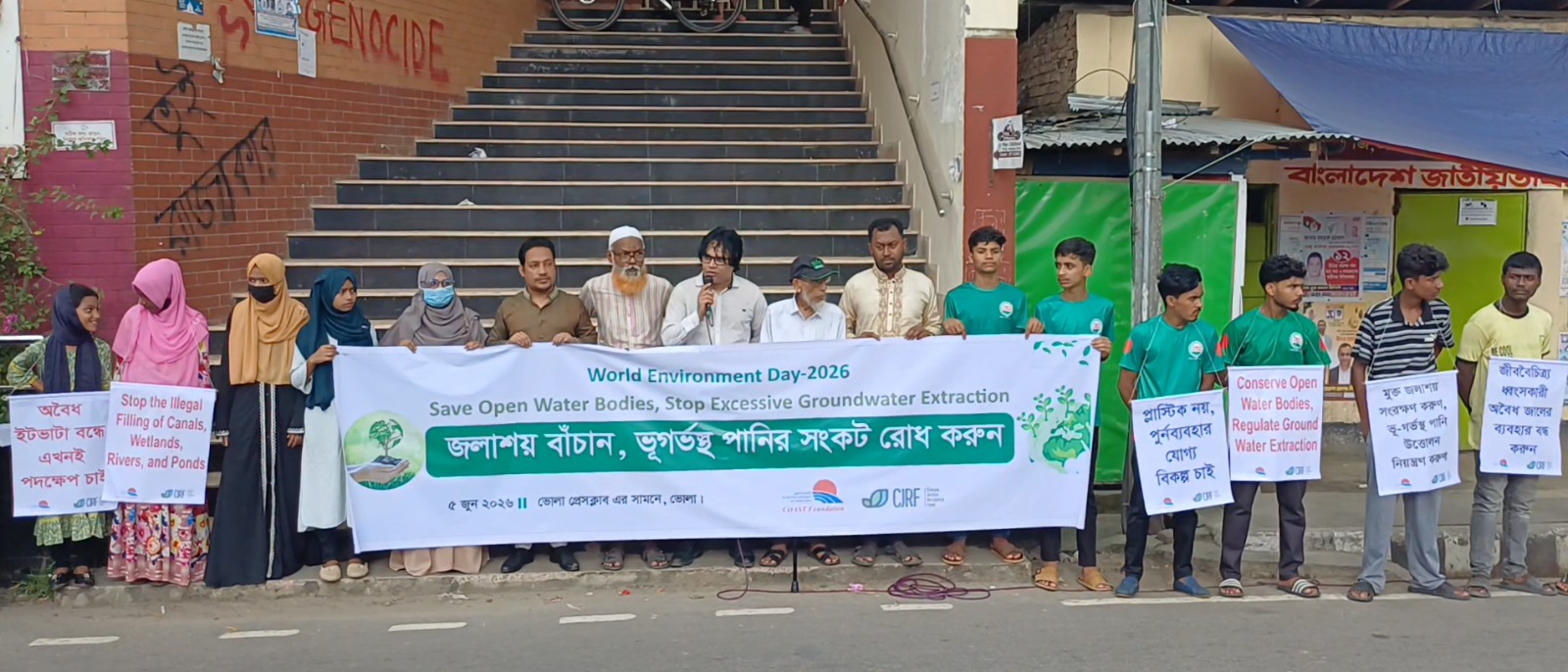
Due to global climate change, Bangladesh, especially coastal areas, is increasingly experiencing irregular rainfall, prolonged droughts, excessive rainfall, waterlogging, and rising salinity. In this context, canals, wetlands, rivers, ponds, and other natural water bodies are vital nature-based solutions for strengthening resilience. But widespread illegal encroachment and land filling are destroying these ecosystems, disrupting natural water flow, and reducing the capacity to store rainwater.
As a result, dependence on groundwater is increasing rapidly, while unregulated extraction through deep tube wells for agricultural irrigation and industrial use is accelerating depletion. Consequently, groundwater levels are falling at an alarming rate, many tube wells are becoming non-functional, and safe drinking water scarcityparticularly in coastal areasis becoming increasingly severe.
The speakers call for the eviction of all illegal encroachments from natural water bodies, strict enforcement of environmental and land-use laws, and full restoration of natural water flows.
They also urge the government to implement a coordinated national program that prioritizes nature-based solutions, including the protection and rehabilitation of rivers, canals, wetlands, government ponds, and other open water systems.
In addition, speakers emphasize large-scale promotion of rainwater harvesting, revival of water retention systems and sustainable groundwater management to reduce dependency on deep tube wells.
Marking the 'World Environment Day 2026', a human chain organized by COAST Foundation was held in front of the Bhola District Press Club on Friday (5 June).
During the program, speakers presented a set of demands related to environmental protection and climate justice. M.A. Hasan, Head of Climate Change of COAST Foundation, moderated the event.
Representatives from civil society, women leaders, journalists, students, youth representatives, and people from various professions participated in the human chain.
Among others, speeches were delivered by Nayemat Ullah, District Correspondent of Prothom Alo; Md. Taslim, General Secretary of Bhola District Krishak Dal; women leader Nurjahan Nila; Advocate Kamal Uddin Sultan; Harunur Rashid Shimul, District Correspondent of Daily Bangladesh Alo; Sumaiya Akhter of BD Clean; and Razib Ghosh from the COAST Climate Resilience Project.
M.A. Hasan of COAST Foundation emphasized the importance of nature-based solutions in addressing environmental challenges. He also called for the recovery of illegally occupied rivers, canals, and ponds, and urged measures to prevent further encroachment.
He stressed the need to excavate and conserve water bodies to enhance rainwater storage, ensure safe drinking water, recharge groundwater and maintain ecological balance.
Neyamat Ullah, District Correspondent of Prothom Alo, said that illegal sand extraction is one of the main causes of the degradation and filling of open water bodies.
He urged the administration to take strict measures against this practice and noted that the declining groundwater level in the region has become a serious environmental concern.
He also warned that unless surface water conservation systems are strengthened, it will be difficult to avoid a future crisis in ensuring the availability of safe drinking water.
Mir Mosharraf Hossain, Member Secretary of Amra Bhola Bashi, said that trees are being cut indiscriminately and supplied to local brick kilns as fuel. However, no effective action has been taken by the Department of Environment or the administration to address the issue.
He warned that if such unchecked deforestation continues, it will be impossible to maintain ecological balance and protect the environment.
Harunur Rashid Shimul, District Correspondent of Daily Bangladesh Alo, said that canals in Bhola town have been encroached upon and filled for tourism projects while many government ponds are already occupied and others are at risk.
He urged authorities to take swift action to recover and protect these water bodies, which are vital for rainwater conservation.
Nurjahan Nila, women leader, said that people living around brick kilns are suffering from various serious diseases, including lung cancer and heart attacks and the death rate is also increasing. She added that the use of fertile topsoil for brick production is gradually reducing soil fertility.
She urged the administration to take strict action to shut down such environmentally and public healthhazardous brick kilns.
Unauthorized use or reproduction of The Finance Today content for commercial purposes is strictly prohibited.