Nonviolence and a War-Free World: Collective Efforts for Peace
If we all realize the truth that "human values are paramount," then a world free of war will not only be a dream, but a reality
The history of human civilization is, on the one hand, the history of creation, knowledge, and the development of culture, and, on the other, the tragic history of war, bloodshed, and violence. In the contemporary world, where armed conflict, terrorism and state repression occur almost constantly, the question of a world free of non-violence and war is not merely a moral conviction, but an inevitable condition of human existence.
The question may arise - where violence seems to be an integral part of human nature, is the philosophy of non-violence just a utopian dream? Or is it a realistic and reasonable path to human liberation?
From a philosophical point of view, non-violence is not just an anti-war stance; it is a whole philosophy of life - one that identifies, transforms, and turns people's inherent violent tendencies into a quest for social justice.
Mahatma Gandhi's' Satyagraha ', Martin Luther King Jr's' Freedom and Justice 'movement - these are proof that non-violence is not just a moral ideal, but a powerful strategy for social change. Gandhi believed that the transformation of violence was more important than the prevention of violence.
As Martin Luther King, Jr. said, "Darkness cannot drive out darkness; only light can do that. The underlying philosophical significance of this statement is that violence is never eliminated through violence; it is only through the creative power of non-violence.
Argentine philosopher, writer and thinker Mario Luis Rodriguez Cobos - known worldwide as "Silo" - has added a new dimension to the philosophy of non-violence." His philosophy is: "The human being as the supreme value."
The significance of this thought is that no religion, state, economy or ideal can be bigger than human life. When an ideal becomes bigger than a human being, it leads to war, discrimination and violence. Silo divides nonviolence into two levels. First, inner non-violence: it is the inner peace of the human mind. This is achieved by being honest with yourself, eliminating hatred and anger, and minimizing emotional conflict.
According to Silo, it is impossible to establish non-violence outside if there is no peace in the mind. This is a deep psychological truth - the person who is violent with himself, will also be violent with others. Second, external non-violence: It is non-violence in dealing with other people in society. Under no circumstances to harm others and to fight for social justice in a non-violent manner. According to Silo's philosophy, internal and external nonviolence are interrelated - one is incomplete without the other.
Silos message of nonviolence is known in the worlds human culture as the Golden Rule: Treat others as you would wish to be treated yourself. This principle is expressed in more or less different languages in almost all religions and philosophies of the world. But Silo's contribution is that he calls for the application of this principle at the social, political and structural level, rather than limiting it to individual morality.
In order to create a war-free world, it is first necessary to analyze the causes of war. The root causes of most wars are economic, political, or religious. "But from a philosophical point of view, it is understood that at the heart of war is man's existential fear, greed for power, and tendency to identify the" "other" "as the enemy."
War not only harms lives; it also destroys the peace, economic stability and mental well-being of society. War is a failure of human civilization - it proves that man has not yet conquered his violent tendencies. Non-violence is therefore not only a moral choice, but an essential condition for the survival of human civilization.
The Community for Human Development is working worldwide to create a world free of violence and war. The organization has organized a colorful rally, seminar, symposium and football tournament titled "Fourth World March for Peace and Non-Violence" around the world with a message of peace from September 21, which will continue until October 4.
The "Humanist Society," a voluntary organization in the Bangladesh chapter, has already organized seminars and colorful rallies in different auditoriums including Dhaka University, Sher-e-Bangla Agricultural University and Shanto-Mariam University of Creative Technology on the occasion of the "Third World March for Peace and Nonviolence" last year.
Apart from this, International Triangular Football Tournament based on universities of Pakistan, Nepal and Bangladesh has also been organized. Various programmes have been organized throughout the State on the occasion.
Such programs are not just symbolic; they are an attempt to apply the philosophy of non-violence in real life. These are examples of "active non-violence"- not just the absence of war, but the active construction of peace.
The importance of international relations in creating a non-violent and war-free world is immense. When countries respect each other, establish dialogue and find peaceful solutions to problems, the chances of war are reduced. International organizations like the United Nations are doing a lot of work to promote peace and stop armed conflict, but this requires more awareness, cooperation and the right leadership. A world free of war will only be possible when states look after the interests of humanity above their own.
If we all realize the truth that "human values are paramount," then a world free of war will not only be a dream, but a reality.
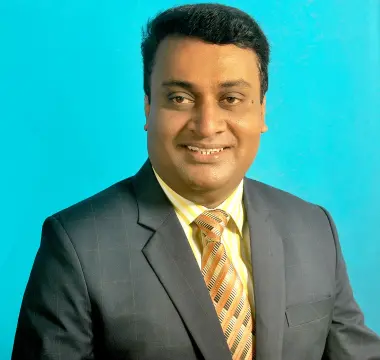
The author is a prominent columnist, policy analyst, researcher, development worker. He is also the president of the Humanist Society.
Shamiur Rahman