From Safe Food to Global Exports: Tuku’s 180-Day Push to Transform Fisheries and Livestock
‘I Will Earn the Reward for the PM’s 180-Day Programme’: State Minister Tuku
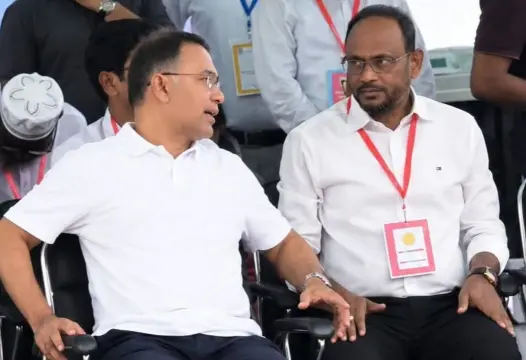
In an exclusive interview with The Finance Today, State Minister for Fisheries and Livestock Sultan Salahuddin Tuku outlines his first six months in office, food safety measures, fisheries and livestock reforms, export ambitions and his development agenda for Tangail Sadar
State Minister for Fisheries and Livestock Sultan Salahuddin Tuku says the government has completed the implementation of its 180-day programme in the fisheries and livestock sector, while laying the groundwork for longer-term reforms in food safety, domestic vaccine production, livestock infrastructure, fish processing and exports.
“We have completed 100 percent of the work in implementing the 180-day programme. In some areas, it has exceeded the target,” Tuku said in an interview with The Finance Today at his Gulshan residence on August 14.
He credited officials and employees of the ministry for working tirelessly and said sustainable plans had been adopted to build on the progress achieved during the first six months.
From food safety to domestic vaccine production
According to Tuku, ensuring food safety has been one of the ministry’s key priorities since the government assumed office.
He said the ministry has held consultations with farmers, entrepreneurs, producers and other stakeholders and issued instructions aimed at ensuring the supply of safe and disease-free food.
The government, he said, is pursuing a longer-term strategy to make the fisheries and livestock sectors more sustainable through modern technology, domestically produced vaccines, improved animal feed, modern processing facilities and infrastructure development.
A significant development, he added, has been the domestic production of two livestock vaccines developed by scientists at the Bangladesh Livestock Research Institute (BLRI).
The vaccines have been handed over to the Department of Livestock Services. Tuku said their domestic production would reduce dependence on imports and help save foreign currency.
Fair-price livestock sales reach millions of families
The ministry also introduced measures during Ramadan and Eid-ul-Adha aimed at making animal-protein products available at affordable prices.
Tuku said ducks, chickens, eggs, milk and beef were sold at fair prices through 36 locations in Dhaka and different districts. According to him, the initiative benefited approximately 1 million to 1.2 million families.
He also said local cattle supplied the demand for sacrificial animals during Eid-ul-Adha, allowing farmers to receive fair prices while consumers were able to purchase animals at affordable rates.
Veterinary doctors were also deployed at every sacrificial-animal market to provide treatment and other necessary services, he said.
Ambition to build an export-oriented livestock sector
The government has also begun expanding the country’s meat-processing infrastructure.
Tuku said 13 meat-processing centres have been inaugurated and that work has begun on developing the capacity to export beef. The long-term plan is to establish modern meat-processing facilities across the country, he said.
The minister also highlighted efforts to improve livestock feed production.
A new grass variety imported from Australia is being introduced, with around 850 farmers trained in its cultivation, according to Tuku. He said the initiative is expected to improve cattle health and increase meat and milk production while reducing dependence on external feed.
Reviving fisheries and expanding exports
The fisheries sector is another major focus of the ministry’s agenda.
Tuku said special measures had been taken to protect jatka, or juvenile hilsa, during the fishing ban. He said more than Tk24 crore in food assistance was provided to fishing families during the restricted period.
Under the programme, each eligible fishing family received rice, oil, potatoes, flour and salt, he said.
The ministry has also released fish into rivers, canals, haors, beels and other water bodies, with the stated objective of ensuring that genuine fishermen benefit from increased fish stocks.
Approximately 60 metric tonnes of fish, according to Tuku, have been released into Kaptai Lake.
The government is simultaneously exploring ways to strengthen fish processing and exports. Plans are underway to establish a feed-processing centre in the Chalan Beel area, while another initiative is being considered in the Mymensingh region, which Tuku said supplies approximately 40 percent of Bangladesh’s fish demand.
Vannamei shrimp returns to the agenda
Bangladesh is also seeking to expand vannamei shrimp production, a segment that accounts for a substantial share of global shrimp production.
Tuku said vannamei production had remained suspended in Bangladesh for around 16–17 years but has now been restarted under a new approach.
“We hope that through this, both shrimp production and exports in the country will increase,” he said.
The ministry is also exploring the production of large pangasius and salmon. Tuku said a vaccine had already been developed to help keep pangasius disease-free, while discussions had been held with a Norwegian delegation regarding salmon production.
Reviving a historic cattle farm
Tuku also spoke about plans to revive the historic Goyal Farm in Naikhongchhari, which he said had suffered from years of neglect.
The government has already visited the site and adopted plans to increase livestock production and promote the Goyal breed of cattle, according to the minister.
Zoo modernization and new facilities
The government is also pursuing a programme to modernize the country’s zoo infrastructure.
Tuku said the zoo’s standards have improved significantly and visitor numbers have increased. On some holidays during the Eid vacation, nearly 190,000 visitors reportedly visited the zoo.
Four new animals have also been added, including two male wildebeests and two common elands. Three Royal Bengal tiger cubs have also been born, he said.
The minister said most of the work needed to bring the zoo to an international standard is nearing completion.
Plans to establish new zoos in Rajshahi, Chattogram, Bogura, Mymensingh and Barishal are also progressing, with site inspections and feasibility studies already undertaken, according to Tuku.
‘No room for corruption’
Asked about allegations of irregularities and corruption in the ministry, Tuku said investigation committees had been formed wherever allegations had emerged over the past 17 years.
Several committees, he said, have already begun their work, and legal action would be taken after the investigation reports are received.
“No opportunity for any kind of irregularity or corruption will be allowed in the ministry,” he said.
A development agenda for Tangail
Beyond his ministerial responsibilities, Tuku is placing considerable emphasis on the development of Tangail Sadar, the constituency he represents.
He said his priorities include improving roads, bridges, culverts and embankments, tackling drug abuse, reducing unemployment, restoring rivers and canals and developing tourism facilities.
One local initiative he highlighted was the removal of water hyacinth from DC Lake, with plans to develop a small-scale tourism facility around the water body.
Tuku also said the government is working to restore canals that have become filled or nearly defunct in Tangail. He linked canal restoration to agricultural productivity, irrigation and the development of the fisheries sector.
A pledge to keep the constituency accessible
Tuku said he wants to maintain direct communication with ordinary citizens and that people should be able to approach him without formal appointments.
He said he has spent the first 180 days working continuously on the development of Tangail Sadar and hopes to fulfil all his election commitments during the next five years.
He also linked his political performance to the government’s 180-day programme and expressed an ambition to advance from state minister to full minister.
“I hope that according to the Prime Minister’s announcement, I will receive the reward of becoming a full minister from the position of State Minister, InshaAllah,” Tuku said.
For Tuku, however, the political promise extends beyond his own advancement. He says the ultimate measure of success will be whether the government can translate its commitments into tangible improvements in people’s lives—from safer food and stronger agricultural production to better infrastructure, employment opportunities and a more sustainable fisheries and livestock economy.
Shamiur Rahman