
- National /
- The Spirit of Ekushey and the Story of Our Behavior

Mustafa Kamal Akanda
Published:2026-02-21 21:34:10 BdST
Respect, politics and civic culture at the Shaheed MinarThe Spirit of Ekushey and the Story of Our Behavior
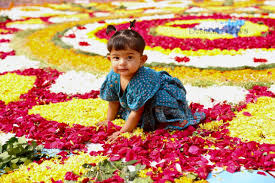
Every year, Ekushey February returns with solemn grace. The Shaheed Minar fills with people, flowers pile up in silent tribute, and the nation pauses to remember the martyrs who sacrificed their lives for the right to speak their mother tongue.
The day symbolises not only linguistic identity but also dignity, inclusiveness, and collective consciousness — values deeply embedded in the Bengali spirit.
Yet beyond the flowers and ceremonial observances, Ekushey increasingly reflects another reality: a mirror to our political culture and social behaviour.
Recent events at the Shaheed Minar present a curious yet revealing picture of our public life. Different political actors arrived with their own expressions of tribute — some sincere, some symbolic, some controversial, and some incomplete. These incidents, when viewed together, invite us to reflect not merely on political rivalry but on our collective relationship with Ekushey’s spirit.
For the first time, Jamaat-e-Islami placed wreaths at the Shaheed Minar to honour the language martyrs. For some observers, this marked a significant gesture — a sign of participation in a shared national tradition.
Others, however, viewed the act with scepticism, questioning whether the tribute was motivated by genuine reverence or political positioning. In a democratic society, such debates are inevitable. Yet the deeper question remains: can national symbols transcend political suspicion, or have they themselves become arenas of contest?
At the same time, another political episode unfolded when opposition leader Rumin Farhana reportedly faced obstacles while attempting to pay her respects at the memorial and ultimately left without placing flowers.
The Shaheed Minar, envisioned as a space of collective remembrance, thus became a site of exclusion — a situation that appears to contradict the very spirit of Ekushey, which historically stands for openness, participation, and the right to expression.
Equally troubling were images of individuals entering the sacred premises with shoes — an act widely perceived as a breach of cultural etiquette. Whether intentional or accidental, such actions raise questions about our sense of civic responsibility and respect for national symbols. The Shaheed Minar is not merely a physical structure; it represents historical sacrifice and emotional heritage. Its sanctity lies in the collective reverence people attach to it.
Meanwhile, members of a major political party — once the ruling force in the country — were unable to offer their tribute under their party banner amid prevailing tensions. Their absence or limitation in expressing homage reveals yet another dimension of our political reality, where symbolic spaces are shaped by shifting power dynamics.
Taken together, these events resemble a theatre of contradictions. At one end, there are flowers, solemnity, and declarations of respect; at the other, there are barriers, disputes, and competing narratives. The Shaheed Minar thus becomes not only a site of remembrance but also a stage where political identity, power, and symbolism intersect.
This raises a broader question: how do we, as a society, practise remembrance? Is Ekushey merely an annual ritual, or does it genuinely shape our conduct throughout the year?
The language movement of 1952 was fundamentally about rights — the right to speak, the right to identity, and the right to dignity. It was not merely a political movement but a cultural awakening grounded in inclusiveness and human values. The martyrs did not sacrifice their lives for division or exclusion; they stood for recognition, participation, and equality.
Yet our contemporary practices sometimes appear to reduce this profound legacy to symbolic gestures. Floral tributes risk becoming performative acts, public displays of allegiance rather than reflections of shared national consciousness. The emphasis often shifts from collective remembrance to individual or partisan visibility.
This phenomenon is not unique to Bangladesh. Across the world, national memorials frequently become spaces where politics and symbolism converge. However, the challenge lies in maintaining the sanctity of such spaces as platforms of unity rather than division.
Ekushey’s enduring power lies in its universality. It speaks not only to linguistic identity but also to democratic values, cultural pluralism, and human dignity. The Shaheed Minar, therefore, should represent a space where differences dissolve in shared respect — where political affiliations momentarily yield to national consciousness.
The incidents surrounding this year’s observance should not merely provoke criticism; they should inspire reflection. They remind us that national values cannot be preserved through ceremonies alone. They require consistent practice in public behaviour, political culture, and civic responsibility.
Respect for Ekushey is not measured solely by the number of wreaths placed at the Shaheed Minar. It is reflected in how we treat one another, how we uphold the dignity of shared spaces, and how we protect the inclusiveness that the language movement represents.
Perhaps the Shaheed Minar’s silent presence offers a profound lesson. It does not speak, yet it witnesses everything — our reverence, our conflicts, our contradictions, and our aspirations. It stands as a reminder that the true spirit of Ekushey lies not in symbolic performance but in ethical conduct.
If Ekushey is to remain meaningful, it must move beyond ritual observance to become a lived value. It must inspire humility rather than competition, unity rather than division, and reflection rather than spectacle.
Ultimately, the story of Ekushey is not only about the past; it is about who we are today and who we aspire to become. The Shaheed Minar continues to stand tall — not merely as a monument of history but as a mirror to our collective conscience.
The question, therefore, is not how many flowers we place, but whether our actions honour the spirit those flowers represent.
Unauthorized use or reproduction of The Finance Today content for commercial purposes is strictly prohibited.